Learn how physiotherapy mentorship and clinical placements help physiotherapy students develop clinical reasoning, hands-on skills, exercise prescription, and confidence in patient care.
Why Clinical Mentorship Matters for Physiotherapy Students
Becoming a confident physiotherapist involves more than learning treatment techniques.
Strong patient care also requires clinical reasoning, assessment skills, hands-on experience, exercise prescription, communication, and an understanding of why different treatment decisions are made.
At Pain Free Health, physiotherapy mentorship and clinical education are an important part of our culture.
Through our physiotherapy student clinical placements and Pain Free Mentorship, future clinicians have opportunities to practice their skills, receive feedback, ask questions, and develop the clinical reasoning needed to approach patient care thoughtfully.
What Is Clinical Mentorship in Physiotherapy?
Clinical mentorship gives physiotherapy students and developing clinicians opportunities to learn alongside experienced practitioners in a clinical environment.
While physiotherapy education provides an important foundation, applying that knowledge in practice requires students to connect what they've learned with real clinical decision-making.
Physiotherapy mentorship may involve guidance in areas such as:
The goal isn't simply to learn what to do. It's also to understand when, how, and why different approaches may be appropriate.
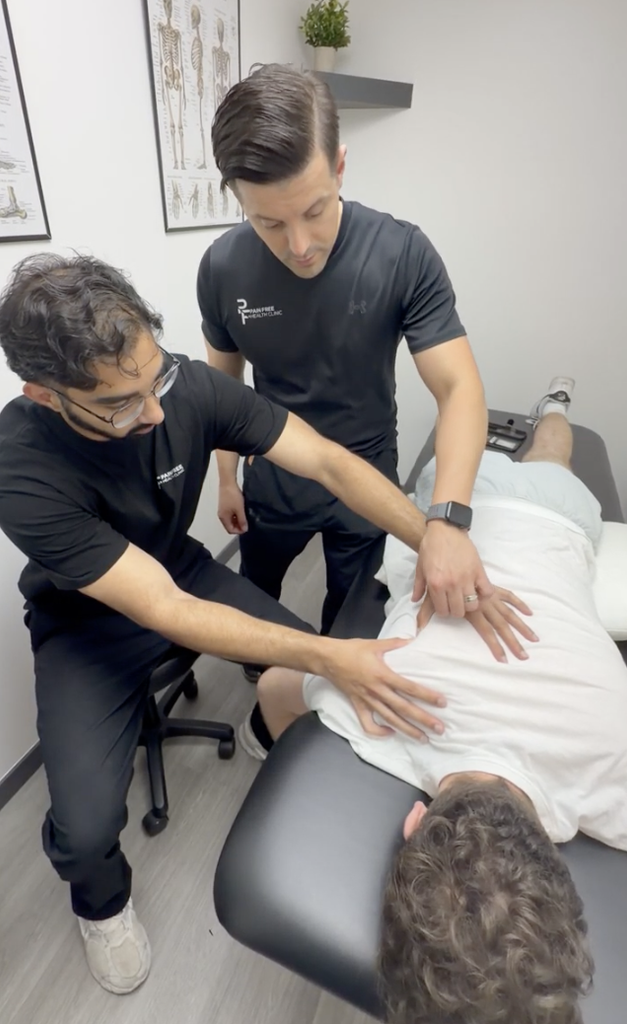
Why Is Clinical Reasoning Important in Physiotherapy?
Knowing a treatment technique is only one part of physiotherapy practice.
Before deciding how to approach rehabilitation, clinicians need to assess the patient and consider their symptoms, movement, function, goals, and other individual factors.
This is where clinical reasoning in physiotherapy becomes important.
Students learn to connect:
Assessment → Clinical Reasoning → Treatment
Instead of simply asking, “Which technique should I use?”, mentorship encourages future physiotherapists to think about why a particular approach may be appropriate for the individual patient.
How Does Hands-On Physiotherapy Training Help Students?
Clinical skills develop through practice, feedback, and continued learning.
During a physiotherapy clinical placement, hands-on mentorship can give students opportunities to practice skills while receiving guidance from experienced clinicians.
This may include learning and refining:
Feedback allows students to refine not only how they perform a technique, but also how they determine when that technique may fit into a broader rehabilitation plan.
Treatment Modalities Are Only Part of the Picture
Treatment tools and modalities can be part of physiotherapy care, but they aren't the entire treatment plan.
Through clinical mentorship, students can learn that selecting a modality isn't simply about knowing how to use the equipment. They also need to understand why it may be considered, what the treatment goal is, and how it fits with the patient's overall rehabilitation plan.
This helps shift the focus from simply performing treatments toward developing broader clinical decision-making skills.
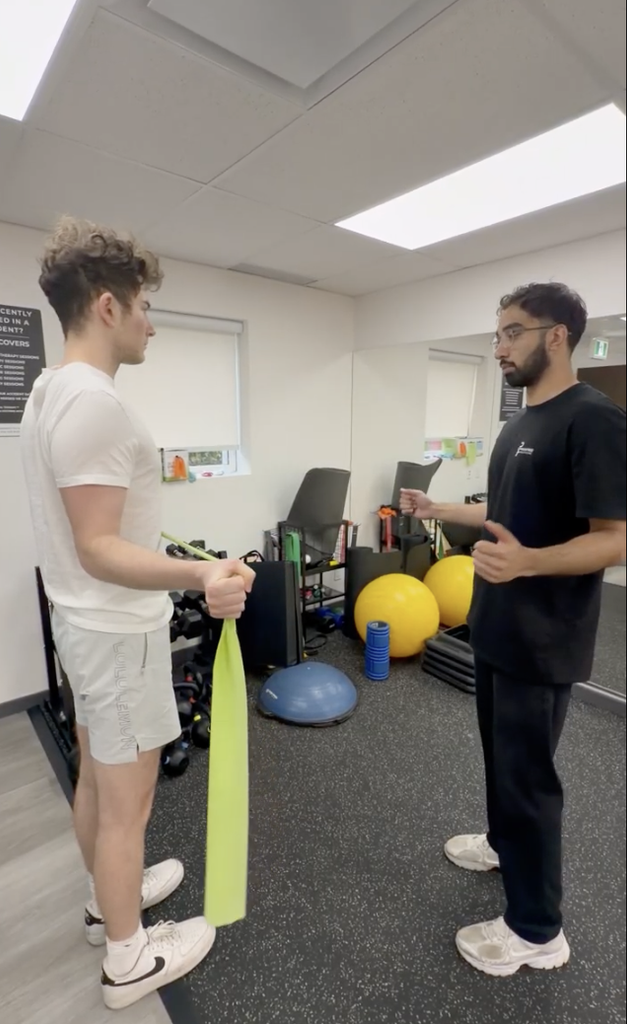
Why Exercise Prescription and Active Rehabilitation Matter
Physiotherapy treatment doesn't necessarily end on the treatment table.
Depending on the patient and their goals, rehabilitation may also involve exercise, movement, strengthening, mobility, and progressive loading to help build physical capacity.
Learning how to select, prescribe, modify, and progress exercises is therefore an important part of physiotherapy student clinical education.
Through mentorship, students can develop a better understanding of how hands-on care and active rehabilitation may work together as part of an individualized treatment plan.
Building Confidence Through Physiotherapy Mentorship
The goal of mentorship isn't simply to teach students more techniques.
It's to help develop thoughtful, confident clinicians who understand not only WHAT they're doing, but WHY they're doing it.
Practice helps build experience.
Feedback helps refine skills.
Clinical reasoning helps connect assessment findings with treatment decisions.
And mentorship gives future physiotherapists an opportunity to develop these skills with guidance along the way.
Better clinicians → Better care → Better patient outcomes.
Interested in Physiotherapy Clinical Placements and Mentorship?
Pain Free Health is proud to support the next generation of healthcare professionals through physiotherapy mentorship, hands-on clinical education, student placements, feedback, and guidance.
If you're a physiotherapy student interested in developing your clinical reasoning and hands-on skills, learn more about Pain Free Mentorship and Clinical Placement opportunities with our team.
📍 Richmond
📍 Ladner
📍 Surrey
📍 Langley
Contact Pain Free Health to learn more about our clinical placement and mentorship opportunities.
Watch the Video
Watch the video above to see physiotherapy clinical mentorship in action, including assessment education, manual therapy and palpation practice, treatment modalities, exercise prescription, and hands-on guidance between experienced clinicians and students.
Learn More About Physiotherapy Mentorship and Clinical Education
Follow Pain Free Health Clinic on YouTube, Instagram, Facebook, and TikTok for more content on physiotherapy mentorship, physiotherapy student clinical placements, clinical education, clinical reasoning, hands-on physiotherapy training, exercise prescription, active rehabilitation, physiotherapy careers, and future physiotherapists.


