Learn how hip internal rotation exercises may help improve hip mobility, movement control, and strength through your available range of motion. Discover four exercises you can incorporate into your routine and why individualized exercise selection matters for your movement goals.
Limited Hip Mobility Making Certain Movements Feel More Difficult? Here Are Four Exercises to Explore
Your hips play an important role in everyday movement.
Activities such as walking, squatting, lunging, running, and changing direction require your hips to move through different ranges of motion.
Hip internal rotation is one part of that movement. It refers to the rotation of your thigh bone inward at the hip joint.
Your available hip rotation and movement control can vary depending on several factors, including your individual anatomy, mobility, strength, activity level, and movement demands.
For some people, exercises that work on hip internal rotation may be useful as part of a broader mobility and strengthening routine.
Here are four exercises to explore.
What Is Hip Internal Rotation?
Hip internal rotation is the movement of your thigh inward toward the midline of your body at the hip joint.
This movement contributes to different activities, including walking, squatting, and changing direction.
Having adequate hip mobility can be useful for performing movements comfortably, but more range of motion isn't automatically better for everyone.
The amount of hip internal rotation you need may depend on your individual anatomy, activity, and movement goals.
Rather than forcing your hips into a particular position, exercises should focus on working within a comfortable range and gradually developing movement control.
4 Exercises to Improve Hip Internal Rotation
These four exercises focus on hip mobility, strength, and control. Choose variations that suit your current ability, and avoid forcing any movement that causes pain.
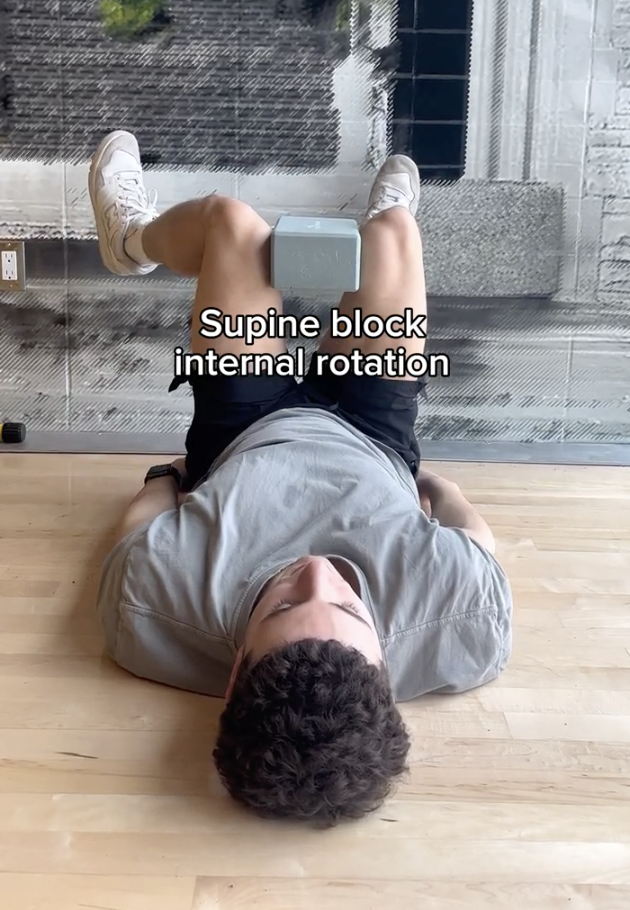
1. Supine Block Internal Rotation
This exercise focuses on practising hip internal rotation while lying on your back.
The supported position allows you to concentrate on the movement without needing to balance your body while standing.
Perform the movement slowly and within your available range of motion. Avoid forcing your hip farther than it comfortably allows.
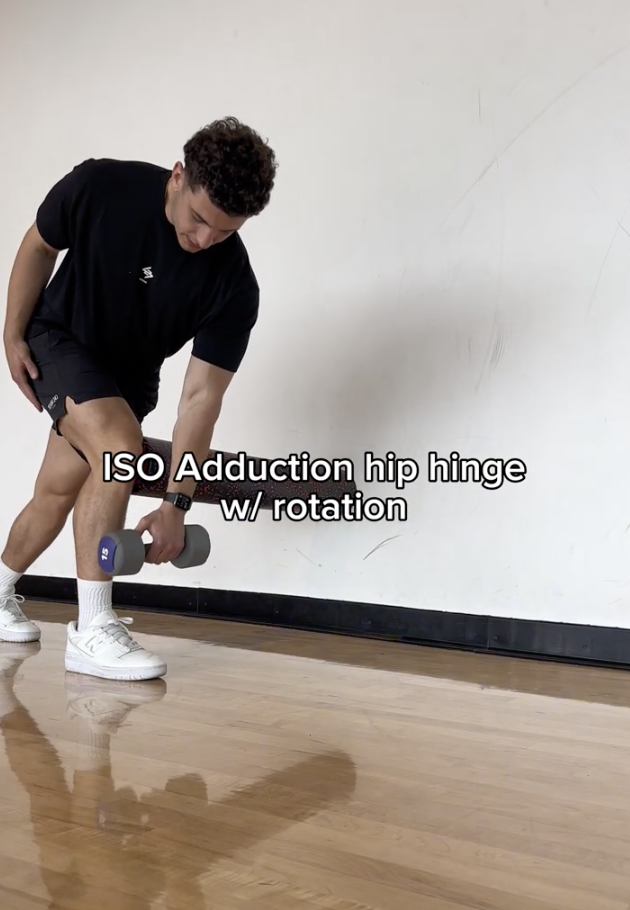
2. ISO Adduction Hip Hinge With Rotation
This exercise combines an isometric adduction effort with a hip hinge and rotation.
The movement challenges you to coordinate your hip position and control while maintaining a stable body position.
Focus on performing the movement with control rather than trying to achieve the greatest possible range of motion.
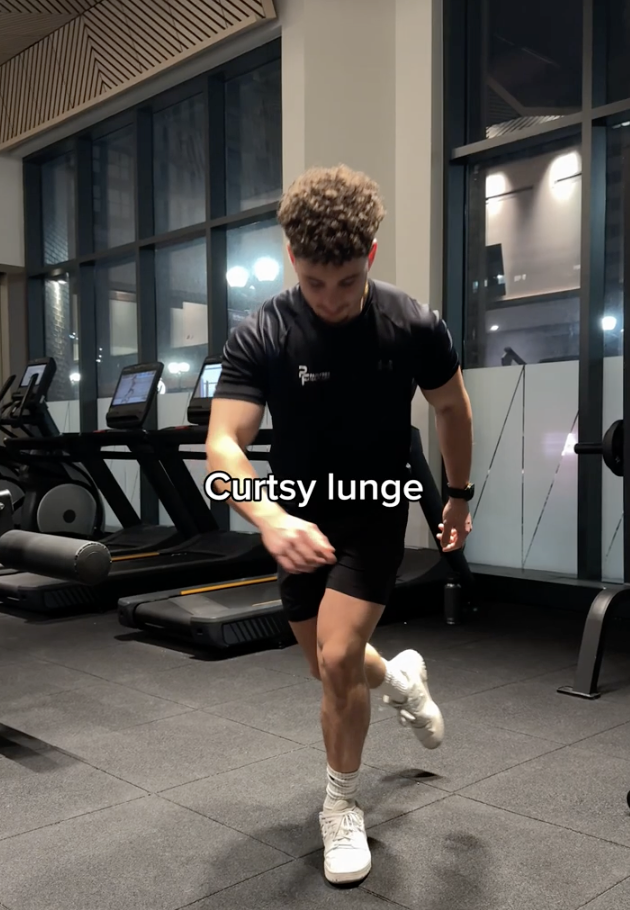
3. Curtsy Lunge
The curtsy lunge involves stepping one leg diagonally behind the other while lowering into a lunge position.
This movement challenges lower-body strength, balance, and coordination while placing the hips in a different position from a traditional forward lunge.
Adjust your step length and depth to suit your ability. Keep the movement controlled, and avoid pushing through discomfort.
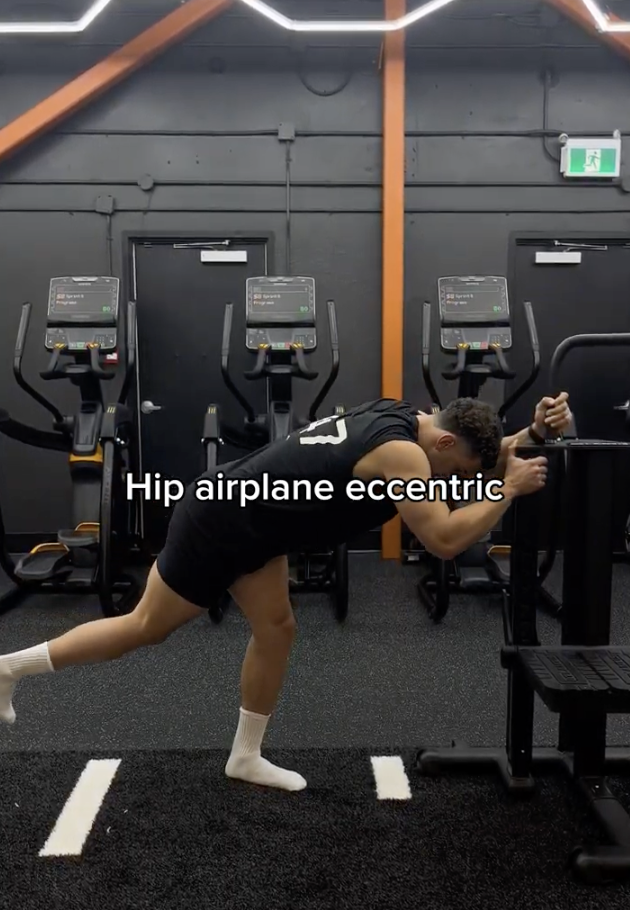
4. Hip Airplane Eccentric
The hip airplane eccentric is a controlled movement that challenges hip stability, balance, and rotational control.
It requires you to maintain control through the supporting hip while moving through a rotational position.
Because this exercise can be challenging for balance and coordination, you may benefit from using support or starting with a simpler variation before progressing.
Focus on controlled movement rather than speed or range.
Why Hip Mobility Involves More Than Stretching
Improving hip mobility isn't necessarily just about stretching or trying to increase your range of motion.
Depending on your individual needs, a well-rounded routine may include:
Mobility Exercises
Controlled movements may help you practise moving through your available hip range of motion.
Strengthening
Progressive strengthening can help develop your capacity for physical activities such as walking, squatting, running, and other movement demands.
Movement Control
Exercises that challenge balance and coordination may help you practise controlling your hips during different movements.
Gradual Progression
Your exercise difficulty, repetitions, and range of motion can be adjusted as your ability and tolerance change.
The most appropriate combination depends on your current mobility, symptoms, training experience, and movement goals.
How Can Physiotherapy Help With Hip Mobility?
Limited hip internal rotation doesn't automatically mean that you have an injury or need treatment.
However, if you experience hip discomfort, difficulty with certain movements, or limitations that affect your everyday activities, a physiotherapist can assess your movement and help determine what may be contributing to the problem.
Depending on the assessment findings, your physiotherapy plan may include mobility exercises, strengthening, movement retraining, or other rehabilitation strategies suited to your needs.
The goal is to identify an appropriate approach based on your symptoms, current abilities, and individual goals rather than assuming everyone needs the same exercises.
How Often Should You Do Hip Internal Rotation Exercises?
The appropriate frequency depends on the exercises, their intensity, your current ability, and how you respond to the movements.
Start with variations you can perform comfortably and with control. Increase the difficulty gradually rather than forcing additional range or continuing through pain.
If an exercise consistently causes discomfort or makes your symptoms worse, stop and consider getting guidance from a qualified healthcare professional.
Need Help With Hip Mobility or Movement?
At Pain Free Health Clinic, we believe your rehabilitation should reflect your symptoms, movement, current abilities, and individual goals.
Our physiotherapy team can assess your hip mobility and movement patterns and determine whether mobility exercises, strengthening, movement retraining, or other rehabilitation strategies may be appropriate for you.
📍 Richmond
📍 Ladner
📍 Surrey
📍 Langley
Watch the Video
Watch our hip internal rotation exercise video to see four movements that focus on hip mobility, strength, and rotational control.
Learn More About Hip Mobility & Physiotherapy
Follow Pain Free Health Clinic on YouTube, Instagram, Facebook, and TikTok for more educational content on hip internal rotation, hip mobility exercises, strengthening, physiotherapy, rehabilitation, and movement health.


