If you ever feel or hear a “click”, “pop”, or “snap” in your hip when you walk, stand up, lift your leg, or play sports, you may be experiencing something called Snapping Hip Syndrome.
It sounds alarming, but it’s more common than most people realize, and often highly treatable with the right approach.
Let’s break down what’s really happening, why it occurs, and how we help clients fix it.
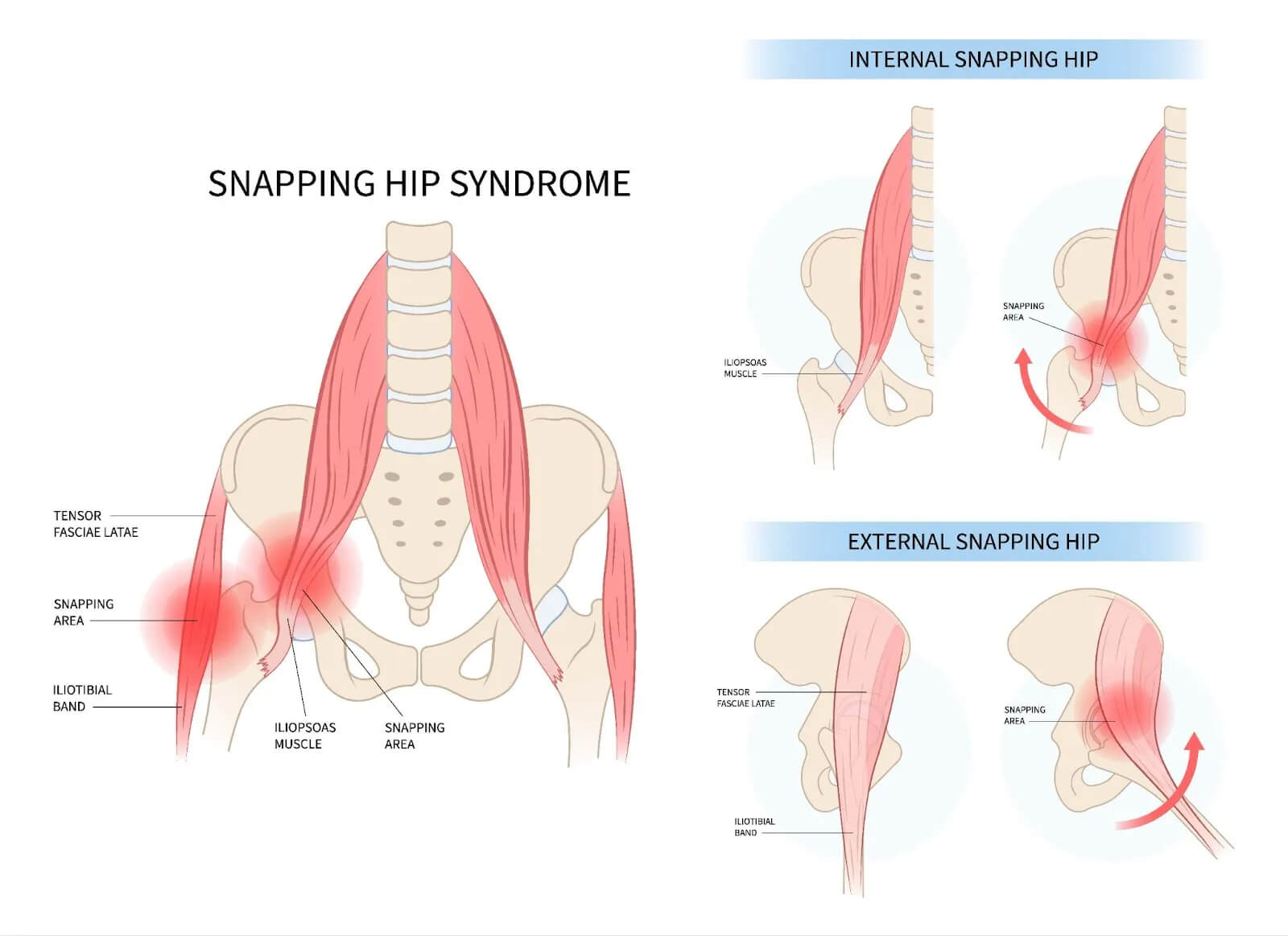
Snapping Hip Syndrome (also known as coxa saltans) is when a tendon or muscle moves across a bone in a way that creates a clicking, popping, or snapping sensation.
It can happen on the front, side, or inside of the hip.
Most cases fall into three categories:
1. External Snapping Hip (most common)
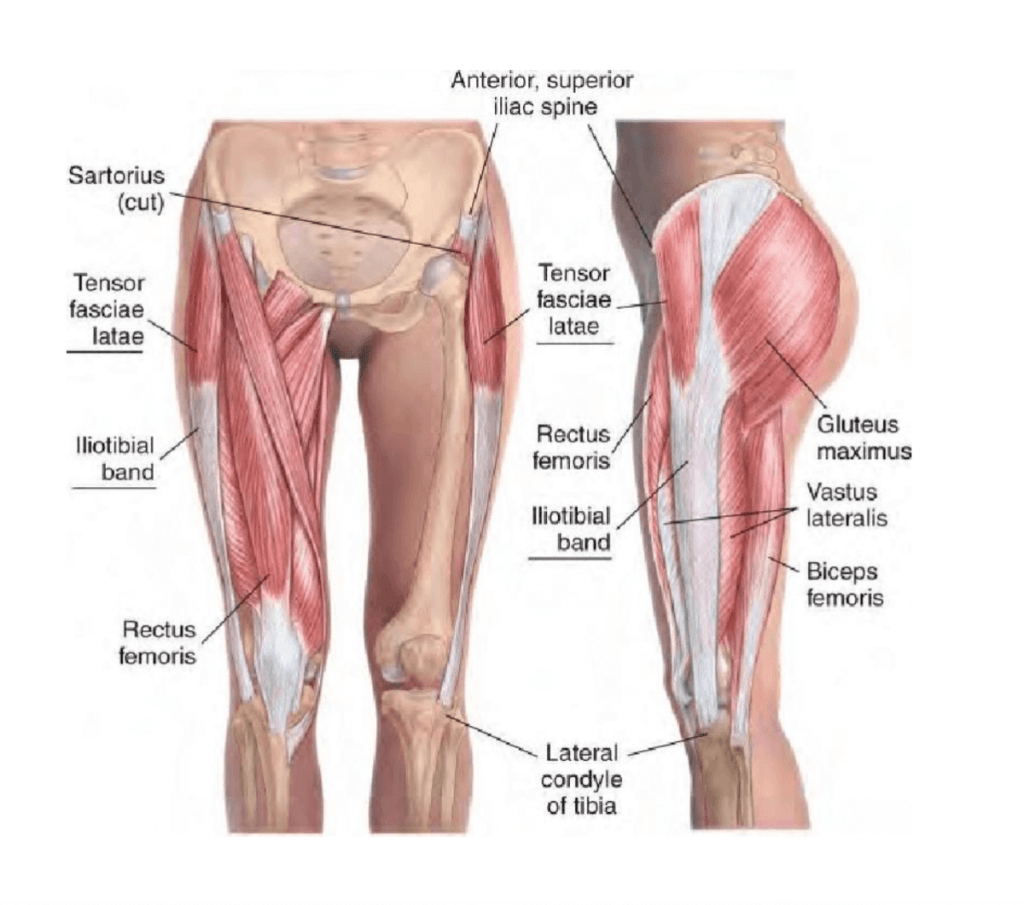
The IT Band or glute max tendon snaps over the outside of the hip bone (greater trochanter).
Common in runners, dancers, hockey players, and anyone who does repetitive leg movements.
2. Internal Snapping Hip
The iliopsoas tendon snaps over the front of the hip.
You may feel it during hip flexion (lifting your knee), kicking, sprinting, or standing after sitting.
3. Intra-articular Snapping
Less common. This is due to something inside the joint itself — like a labral tear, cartilage issue, or loose body.
This type usually requires imaging and a more medical work-up.
Snapping Hip is often a mechanical problem caused by imbalance, tightness, or instability.
Some of the most common causes include:
Tight hip flexors or IT band
When these tissues become overused or shortened, they glide over bone rather than move smoothly.
Weak or underactive glutes
If the glutes aren’t stabilizing the pelvis, other muscles “take over,” leading to abnormal movement patterns.
Core or pelvic instability
Without proper control through the trunk, the hip has to compensate — often making tendons work harder than they should.
Repetitive movement sports
Baseball, dance, soccer, hockey, running, and martial arts all involve motions that can overwork specific hip tissues.
Leg length differences or hip asymmetry
Even subtle differences can cause a tendon to track differently.
Poor movement patterns
Walking with the feet turned out, excessive swayback posture, or compensatory movement from a past injury can contribute.
Not always — many people experience snapping without pain.
However, if snapping is paired with pain, stiffness, or weakness, it’s a sign of irritation or compensation that shouldn’t be ignored.
Untreated snapping hip can lead to:
This is why early assessment is important — especially for athletes who rely on hip mechanics for power and speed.
Treatment depends on the type of snapping hip, but typically includes:
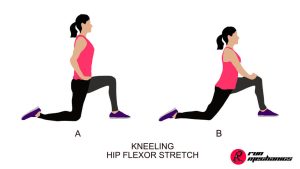
Targeted stretching + mobility
Strengthening weak muscles
Especially:
Building balanced strength prevents tendons from overworking.
Improving movement patterns
Correcting gait, squat form, running mechanics, or sport-specific technique is key.
Addressing pelvic alignment or asymmetry
Small compensations can create big changes in tendon tracking.
Gradual return to loading
Especially important for runners, dancers, and field/court athletes.
Try these to see if snapping hip may be linked to imbalance:
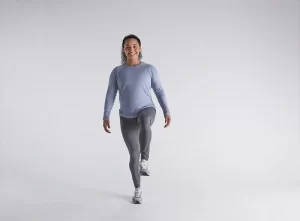
Test 1: Single-Leg Balance
If you wobble more on one side → hip instability is likely.
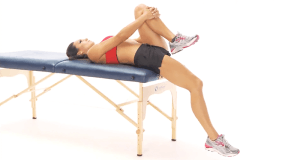
Test 2: Hip Flexor Stretch Test
If one side is much tighter → possible internal snapping contributor.
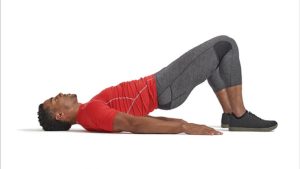
Test 3: Glute Activation Check
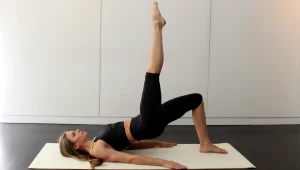
Try a single-leg bridge.
If your hamstring cramps → the glutes aren’t doing their job.
If any of these tests provoke a “snap,” it’s worth getting evaluated.
You should seek professional help if you experience:
The earlier you address it, the easier it is to fix.
We specialize in assessing the root cause behind snapping hip — whether it’s tightness, weakness, joint restriction, or compensation.
Our treatment approach includes:
✔ Individualized movement assessment
✔ Mobility + Manual therapy (shockwave, dry needling and hands-on)
✔ Specific strengthening
✔ Pelvis/hip stabilization
✔ Return-to-sport progression
✔ Prevention strategies
If your hip is snapping, clicking, or popping — we can help you move pain-free again.
👉 Book an assessment today.
(604)-553-8435


