Learn how hip stability may influence knee movement during walking, running, and squatting. Discover why hip strength and movement control can be part of a broader approach to managing knee pain and why an individualized physiotherapy assessment matters.
Experiencing Knee Pain? The Problem May Not Be Coming From Your Knee Alone
Knee pain can affect more than just your workouts.
Everyday activities such as walking, running, climbing stairs, squatting, or standing for long periods can become uncomfortable when your knee symptoms interfere with movement.
Although knee pain can have many possible causes, the knee doesn't work in isolation. The hips, knees, and ankles work together to help control your body's movement during everyday activities and exercise.
One factor worth considering is hip stability.
When your hips have difficulty controlling movement during certain activities, your lower body may move differently. Depending on the individual, these movement patterns may influence how forces are distributed through the knee.
This doesn't mean that poor hip stability is always the cause of knee pain. However, assessing hip strength and movement control may help identify factors that could be contributing to your symptoms.
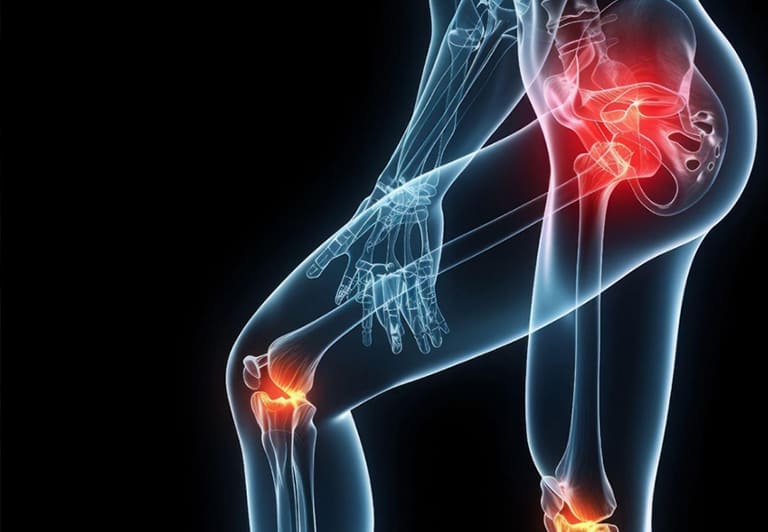
What Is Hip Stability?
Hip stability refers to your ability to control the position and movement of your hip during different activities.
Several muscles contribute to this control, including the gluteal muscles. These muscles help stabilize the pelvis and control hip movement during activities such as walking, running, stepping, and balancing on one leg.
For example, when you stand on one leg during walking or running, your hip muscles help control your pelvis while your body moves forward.
Hip stability isn't simply about keeping your hips still. It's about having the strength and coordination to control movement according to the demands of the activity.
How Can Poor Hip Stability Affect the Knee?
The hip and knee work together during many lower-body movements.
If your hip muscles have difficulty controlling movement during a particular activity, your leg may move differently as you walk, run, squat, or land from a jump.
Depending on your movement patterns and individual circumstances, these changes may affect the demands placed on the knee.
However, hip instability doesn't automatically mean you'll develop knee pain. Knee symptoms can be influenced by several factors, including training load, previous injuries, muscle capacity, joint conditions, and other individual considerations.
This is why looking at the entire movement pattern can be useful when assessing knee discomfort rather than focusing on the knee alone.
Why Hip Strength Matters for Knee Function
Hip strengthening may be included in rehabilitation programs for certain types of knee pain, depending on the individual's assessment findings.
A strengthening program may focus on improving the muscles' ability to control the hip and pelvis during everyday activities and exercise.
Depending on your needs, exercises may target:
Gluteus Medius
The gluteus medius helps move the leg away from the body's midline and contributes to pelvic control during single-leg activities.
Gluteus Maximus
The gluteus maximus contributes to hip extension and helps produce force during activities such as climbing stairs, running, and standing up from a squat.
Hip and Lower-Body Coordination
Exercises that involve stepping, squatting, or balancing may help you practise controlling your hip and knee positions during functional movements.
The appropriate exercises depend on your current strength, symptoms, movement patterns, and activity goals.
How Can You Work on Hip Stability?
Hip stability can be addressed through different exercises and movement activities. The right selection and difficulty depend on your current ability and whether any movements aggravate your symptoms.
Hip Strengthening Exercises
Exercises targeting the gluteal muscles may help develop hip strength and control. Your program may include side-lying hip abductions, clamshell variations, or other exercises selected according to your needs.
Single-Leg Exercises
Movements such as step-downs and supported single-leg exercises can challenge balance, hip control, and coordination.
Controlled Squats and Step-Downs
These movements allow you to practise controlling your lower body while performing activities that resemble everyday movement demands.
Gradual Progression
As your strength and tolerance improve, exercises can be adjusted to increase resistance, repetitions, or difficulty. Progression should be appropriate for your current ability and symptoms.
These exercises are not suitable for everyone in the same way. If a movement causes pain or worsens your symptoms, modify or stop the exercise and seek professional guidance when needed.
Does Every Case of Knee Pain Need Hip Strengthening?
No. Knee pain can have many different causes, and hip strengthening isn't the only treatment approach.
Some people may benefit from exercises that target hip strength and control. Others may need a program that also addresses knee strength, mobility, training load, balance, or other factors identified during an assessment.
The most appropriate approach depends on what may be contributing to your symptoms.
Rather than assuming your knee pain comes from weak hips, an individualized assessment can help determine whether hip stability is relevant to your situation and which treatment strategies may be appropriate.
Why an Individual Physiotherapy Assessment Matters
Two people can experience knee pain during the same activity but have different contributing factors.
A physiotherapist may assess your symptoms, strength, mobility, balance, and movement during relevant activities. Your medical history, previous injuries, exercise routine, and daily demands may also be considered.
This information can help guide a treatment plan that reflects your needs rather than automatically prescribing the same exercises to everyone.
If your knee pain is persistent, worsening, or affecting your everyday activities, consider seeking an appropriate clinical assessment.
Need Help With Knee Pain or Hip Stability?
At Pain Free Health Clinic, we believe your rehabilitation should reflect your symptoms, movement, current abilities, and individual goals.
Our physiotherapy team can assess your knee symptoms, hip strength, and movement patterns to help identify factors that may be contributing to your discomfort. Depending on your assessment findings, your treatment plan may include hip strengthening, knee exercises, movement retraining, or other rehabilitation strategies suited to your needs.
If knee pain is affecting your daily activities or workouts, a physiotherapy consultation may help you better understand your symptoms and explore appropriate treatment options.
📍 Richmond
📍 Ladner
📍 Surrey
📍 Langley
Watch the Video
Watch our video to learn why hip stability may be worth considering when exploring factors that can contribute to knee pain.
Learn More About Knee Pain & Physiotherapy
Follow Pain Free Health Clinic on YouTube, Instagram, Facebook, and TikTok for more educational content on knee pain, hip stability, glute strengthening, running, physiotherapy, rehabilitation, and movement health.


