If you’ve ever felt burning, tingling, numbness, or sharp pain along the outer part of your thigh, you may be dealing with a condition called Meralgia Paresthetica.
This condition is commonly misunderstood, often mistaken for hip or back problems, and can be frustrating for patients who don’t know why the symptoms won’t go away. The good news is that once properly identified, Meralgia Paresthetica is very treatable.
Let’s break down what it is, why it happens, and how we address it in our clinic.
Meralgia Paresthetica is a nerve compression condition involving the lateral femoral cutaneous nerve (LFCN).
This nerve:
Importantly, this nerve is sensory only, it does not control muscle strength. That’s why people experience sensory symptoms like burning or numbness, but not weakness.
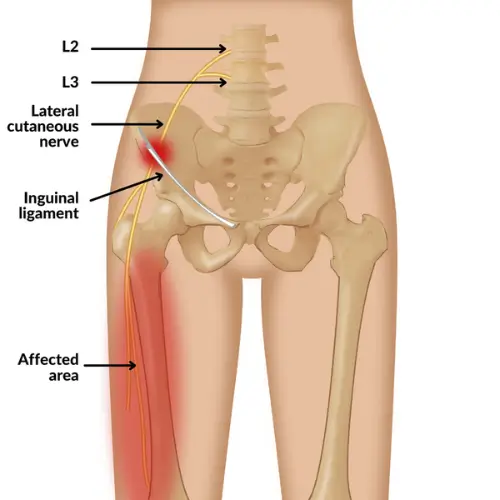
Symptoms usually occur on one side and may include:
The pain often stays localized to the outer thigh and does not travel below the knee.
The most common cause is compression of the lateral femoral cutaneous nerve as it passes under the inguinal ligament near the front of the hip.
Common contributing factors include:
1. Tight Hip Flexors or Pelvic Muscles
Muscles like the iliopsoas can tighten and increase pressure on the nerve.
2. Prolonged Sitting or Poor Posture
Long periods of sitting, especially with hip flexion, can irritate the nerve over time.
3. External Compression
4. Repetitive Hip Motion
Common in runners, cyclists, and athletes who repeatedly flex the hip.
5. Body Changes
6. Previous Injury or Surgery
In some cases scar tissue or altered mechanics around the pelvis can change nerve mobility.
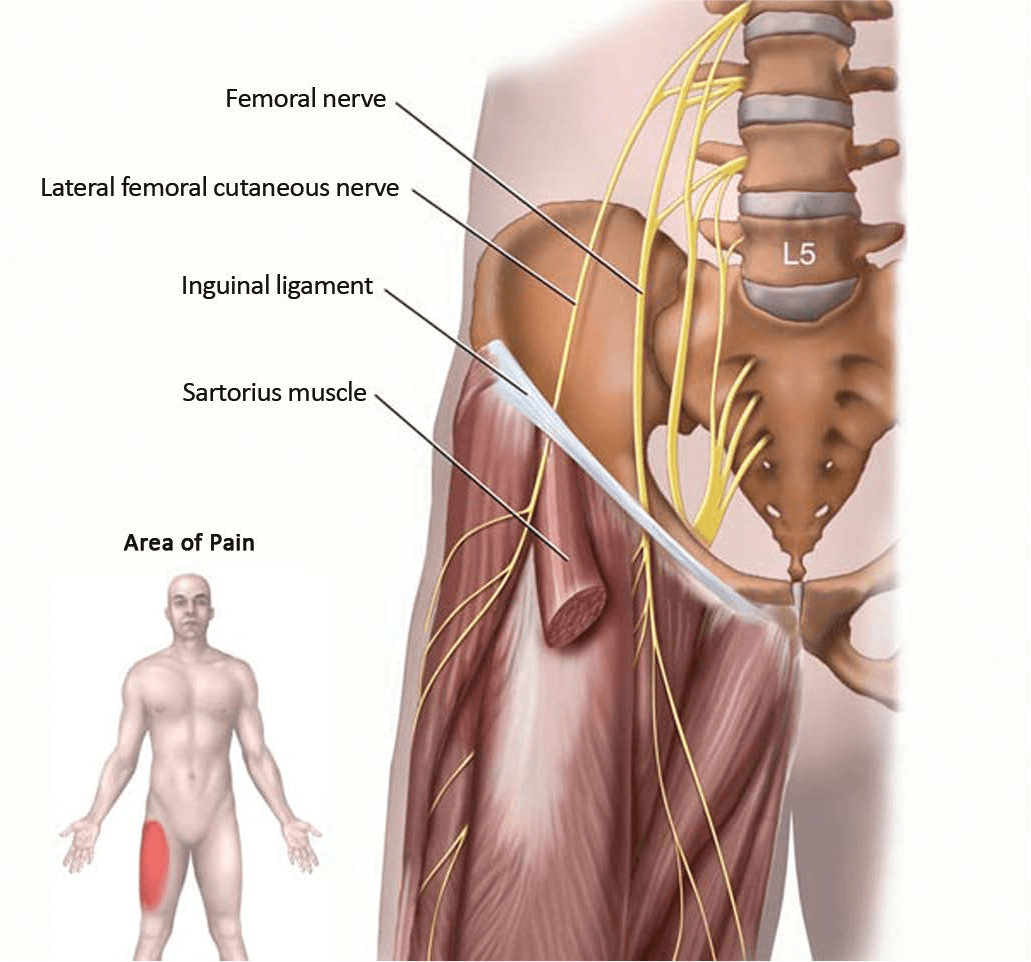
This condition is often confused with:
Key differences:
That’s why a proper movement and nerve assessment is essential.
A proper assessment focuses on finding the source of nerve irritation, not just treating symptoms.
Our evaluation may include:
This allows us to identify whether symptoms are driven by tight tissues, movement patterns, or external compression.
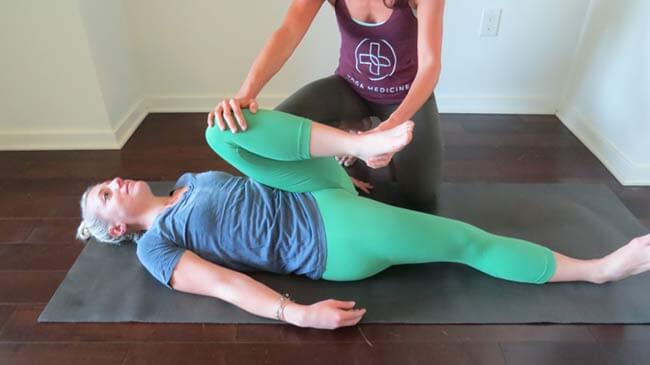
Treatment is conservative and highly effective when properly targeted.
1. Reduce Nerve Compression
2. Restore Mobility
3. Improve Nerve Movement
4. Strengthen Supporting Muscles
5. Correct Movement Patterns

You should seek professional evaluation if:
Early treatment prevents chronic nerve irritation and prolonged discomfort.
We focus on identifying why the nerve is irritated, not just calming symptoms.
Our approach includes:
✔ Comprehensive movement and nerve assessment
✔ Hands-on therapy
✔ Targeted mobility and strength work
✔ Posture and lifestyle guidance
✔ Long-term prevention strategies
If you’re dealing with outer thigh pain, burning, or numbness, we can help you move comfortably again.


