Struggling to move your shoulder fully after pain or injury? Learn how assisted shoulder exercises help improve mobility, reduce stiffness, and support recovery safely.
Can’t Move Your Shoulder Fully Yet? Start With Supported Movement
Shoulder stiffness and weakness can make simple movements feel difficult after pain or injury.
Reaching overhead, lifting your arm, or rotating your shoulder may feel limited, uncomfortable, or weak.
Trying to force movement too early can sometimes increase irritation and strain.
That’s why supported shoulder exercises are often used during recovery.
Why Shoulder Movement Becomes Limited
After injury, pain, or inflammation, the shoulder may become stiff and guarded.
Muscles around the joint can tighten, movement becomes restricted, and the shoulder may feel weak during activity.
This can happen due to:
• shoulder injury or irritation
• prolonged inactivity
• muscle weakness
• pain during movement
• limited range of motion
As movement decreases, stiffness can continue to build over time.
What Are Assisted Shoulder Exercises
Assisted shoulder exercises help the shoulder move with support instead of forcing the muscles to do all the work on their own.
These movements are often used during early recovery to help restore motion gradually and safely.
The goal is to improve mobility while reducing unnecessary strain on the shoulder.
Exercises That May Help Improve Shoulder Mobility
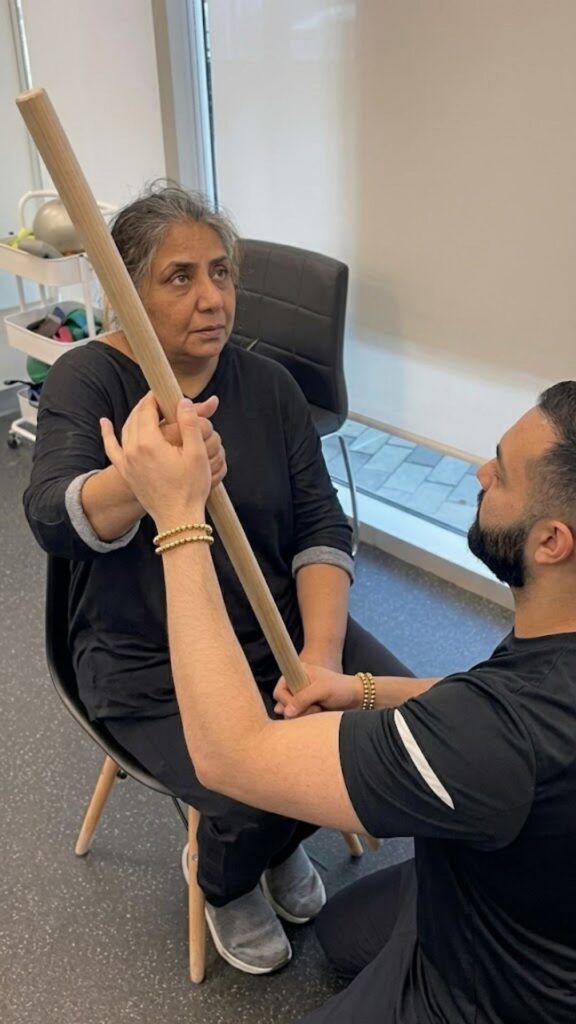
Assisted External Rotation
This movement helps guide shoulder rotation with support, reducing stress on the recovering shoulder.
It may help:
• improve shoulder mobility
• reduce stiffness
• support safe movement
• improve joint function
Supported Shoulder Rotation
Using assisted movement allows the shoulder to move through range more comfortably during recovery.
It may help:
• improve range of motion
• reduce guarding and tension
• improve movement confidence
• support recovery progression
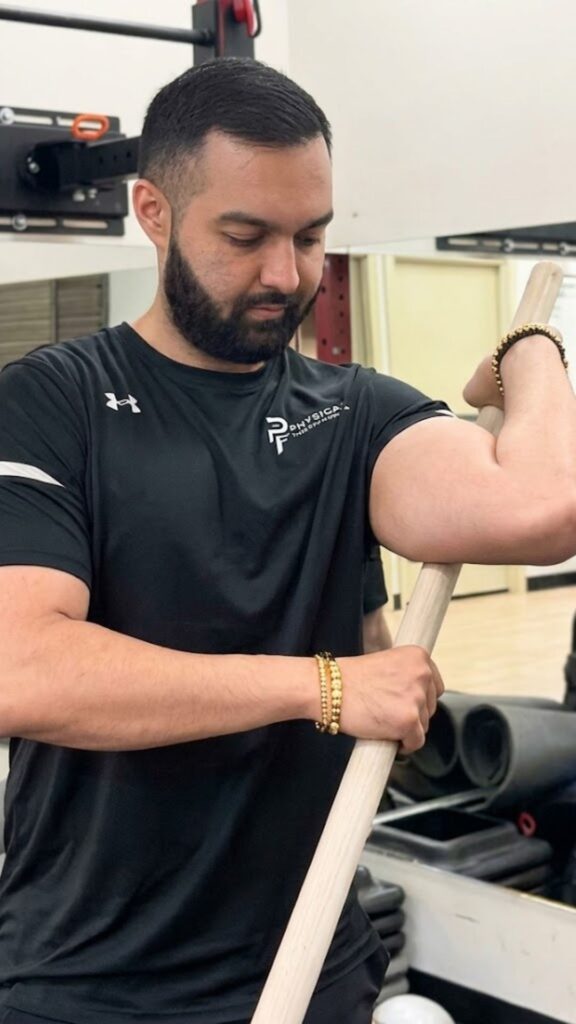
AAROM With Stick
Using a stick helps guide movement so the shoulder muscles are not overloaded too early.
It may help:
• support controlled movement
• reduce strain during exercise
• improve mobility safely
• assist shoulder recovery
Why Supported Movement Matters
During recovery, the shoulder may not tolerate full active movement immediately.
Supported exercises allow gradual progress without placing too much stress on healing tissues.
This may help:
• improve shoulder mobility safely
• reduce stiffness over time
• support muscle recovery
• prevent further strain or irritation
Starting slowly and progressing properly can improve long-term outcomes.
Who Can Benefit From This
These exercises may help individuals experiencing:
• shoulder stiffness
• limited shoulder mobility
• weakness after injury
• discomfort during movement
• restricted range of motion
Final Thoughts
Recovering shoulder movement takes time, patience, and proper progression.
Trying to force movement too early may increase irritation instead of helping recovery.
Supported shoulder exercises can help restore movement gradually while improving comfort and confidence during activity.
Small, consistent improvements can make a big difference over time.
Take the Next Step Toward Better Shoulder Movement
If your shoulder stiffness or pain is limiting your movement, a proper assessment can help identify what your shoulder needs during recovery.
Pain Free Health Clinic provides services in:
Richmond
Ladner
Surrey
Langley
Book your assessment today and start moving more comfortably again.
Want to see how assisted shoulder exercises help improve mobility and support recovery?
Watch our videos demonstrating shoulder rehab movements designed to improve range of motion safely and effectively.
Follow Pain Free Health Clinic on YouTube, Instagram, Facebook, and TikTok for more rehab exercises and recovery tips.


