Haglund’s Deformity: Understanding the “Pump Bump”
Heel pain can make everyday activities such as walking or running uncomfortable. A potential cause is Haglund’s deformity, also known as the “Pump Bump”. Understanding the causes, symptoms and treatment options can help you manage your pain and return to the activities you enjoy.
What is Haglund’s Deformity?
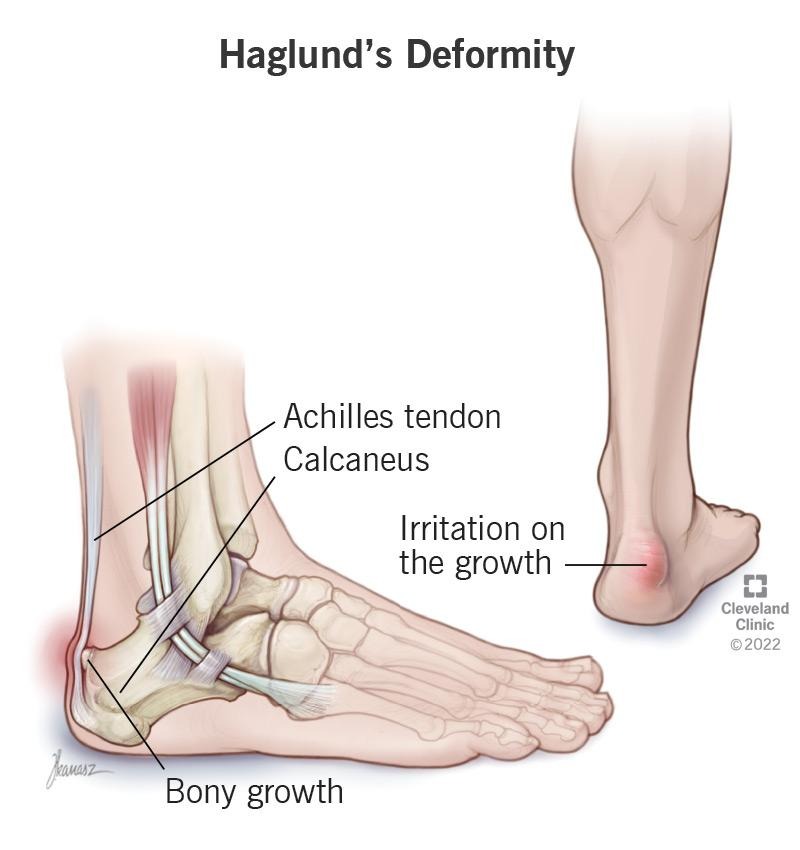
Haglund’s deformity is a bony enlargement that develops on the back of the heel bone, near the Achilles tendon attachment. The bony prominence itself may not always elicit pain but it can create friction between the heel, surrounding soft tissue, and footwear.
Why Does the Back of the Heel Become Irritated?
The back of the heel can be irritated during walking, running, and other weight bearing activities because of the bony bump rubbing against the back of your shoe. This repetitive pressure may inflame surrounding soft tissue, resulting in pain and/or discomfort that can worsen with activity.
Common Symptoms
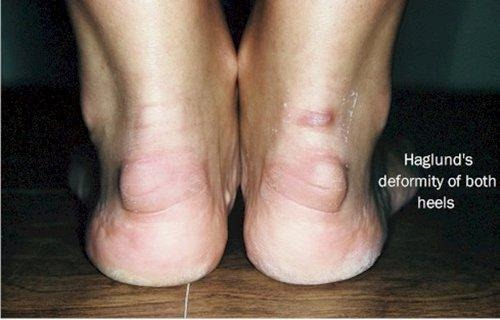
Symptoms can gradually develop and may include pain at the back of the heel, swelling or redness, increased irritation or blistering from wearing shoes. Some may find that their symptoms improve when walking barefoot but return when wearing footwear with a firm heel.
Haglund’s Deformity Vs. Achilles Tendinopathy
It is important to note that some people may develop both conditions simultaneously and some symptoms can be similar. However, they are not the same. Haglund’s deformity refers to the physical enlargement of the heel bone, therefore irritating surrounding structures such as the Achilles tendon.
Achilles tendinopathy refers to the degeneration of the Achilles tendon due to repetitive or increased loading. Symptoms can include morning stiffness, pain during activity and localized tenderness.
How Footwear can Contribute
Footwear with a tight heel can cause repeated rubbing against the bony prominence, therefore causing further irritation to the surrounding tissues. High heels may also irritate some individuals. Wearing appropriate footwear with features such as a softer heel collar, heel cushioning, and an overall comfortable fit will reduce pressure on the heel and improve comfort in daily activities.
How is it Assessed?
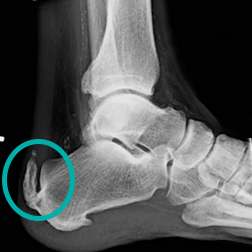
Assessment will include discussion about your activity level, previous injuries, medical history and changes in footwear that may be a contributing factor. Physical examination will include observing the heel for a visible bony prominence, swelling, redness, and palpation of the area. Ankle range of motion, strength, walking and running mechanics are key areas to assess as well. X ray can also be used to determine the progression of the bony prominence
Conservative Treatment Options
Conservative treatment aims to reduce pain and inflammation, as well as improve lower leg function. Footwear and activity modification may be recommended to reduce symptoms. Progressive strengthening of the calf muscles and Achilles tendon will aim to build tolerance without aggravating the area. Additional treatments such as stretching, manual therapy, and ice may also be recommended.
When Surgery May be Considered
Surgery may be considered when symptoms persist despite months of conservative treatment and continue to significantly impact daily activities. The surgery involves removing the bony prominence to reduce pressure on surrounding tissues. Following surgery, physiotherapy is essential to restore ankle mobility and strength to return to normal activities.


