Learn how dry needling may target myofascial trigger points in the neck and shoulders, what a local twitch response means, and why recurring muscle tension may require a broader physiotherapy approach.
That Tight Spot in Your Neck or Shoulder? It Could Be a Trigger Point
You know that one spot in your neck or shoulder that always seems to feel tight, even after stretching or massage?
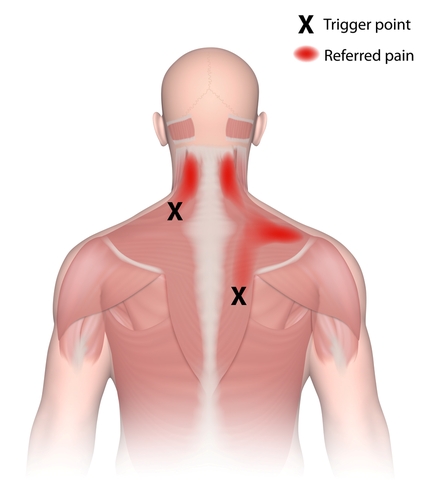
Sometimes, a sensitive area within the muscle may be a myofascial trigger point. These areas can be tender when pressed and may contribute to discomfort either directly around the muscle or in another area through referred pain.
Dry needling is one treatment technique that may be used to target these sensitive muscle areas and support more comfortable movement.
What Is a Myofascial Trigger Point?
A myofascial trigger point is a sensitive area within a muscle that may cause local or referred pain.
In the neck and shoulders, these sensitive areas may contribute to the persistent feeling of a muscle “knot” or tight spot that keeps returning.
However, recurring muscle tension doesn't always mean the muscle itself is the only factor involved. Posture, repetitive movement, workload, strength, mobility, stress, and other individual factors may also need to be considered.
How Does Dry Needling Target Trigger Points?
Dry needling involves inserting a thin needle into or near a targeted sensitive muscle area.
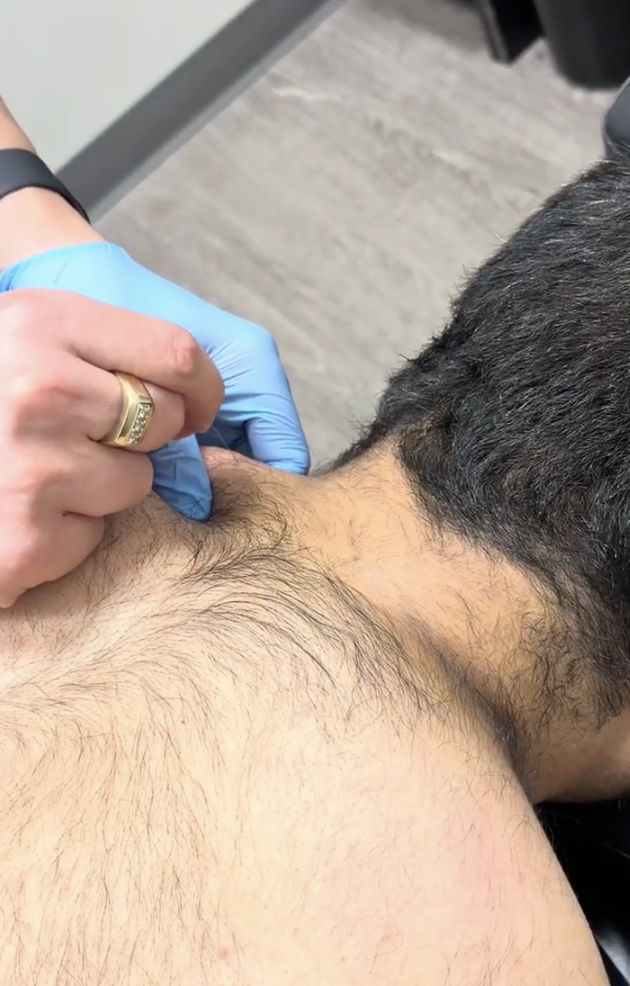
When the needle stimulates a trigger point, the muscle may sometimes briefly contract or “jump.” This is known as a local twitch response.
While the twitch can be noticeable during treatment, producing a twitch isn't the overall goal.
The focus is on managing symptoms and helping support more comfortable movement as part of an appropriate rehabilitation plan.
What Is a Local Twitch Response?
A local twitch response is a brief, involuntary contraction of muscle fibres that may occur when a needle stimulates a trigger point.
You may actually see the muscle quickly contract during dry needling.
But seeing a twitch doesn't necessarily determine whether treatment has been successful. The more important consideration is how treatment contributes to improvements in symptoms, movement, and function.
How May Dry Needling Help?
For appropriate patients, dry needling may help:
Dry needling is typically used as one part of a broader treatment plan, rather than as a standalone solution.
Why Does the Same Trigger Point Keep Coming Back?
If the same neck or shoulder spot repeatedly becomes tight or sensitive, simply treating that area may not tell the whole story.
Other contributing factors may include:
A physiotherapy assessment can help identify factors that may be contributing to recurring symptoms and determine which treatment and rehabilitation strategies are appropriate.
Dealing With a Stubborn Neck or Shoulder Trigger Point?
If neck or shoulder tension keeps returning or affects your movement and daily activities, a physiotherapy assessment can help identify what's contributing to the problem and guide an individualized treatment plan.
📍 Richmond
📍 Ladner
📍 Surrey
📍 Langley
Watch the Video
Watch the video above to see dry needling being used to target a neck and shoulder trigger point and what a local twitch response can look like during treatment.
Learn More About Dry Needling and Physiotherapy
Follow Pain Free Health Clinic on YouTube, Instagram, Facebook, and TikTok for more educational content on dry needling, trigger points, neck pain, shoulder tension, physiotherapy, mobility, pain management, and rehabilitation to help you move with confidence.


