Learn how the patella moves as your knee bends and straightens, what patellar mobilization is, and why appropriate kneecap mobility may matter for knee movement and rehabilitation.
Your Kneecap Is Supposed to Move: Understanding Patellar Mobilization
Did you know your kneecap is actually designed to move?
The patella, or kneecap, does not remain in one fixed position. It glides as your knee bends and straightens, and this movement is part of normal knee mechanics.
When patellar movement becomes restricted, it can sometimes be one piece of the puzzle in knee stiffness or limited range of motion, including during certain stages of rehabilitation.
How Does Your Kneecap Move?
The patella moves within a groove at the front of the knee as the knee bends and straightens.
This movement helps the knee function efficiently through its range of motion.
Because the patella is designed to move, clinicians may assess its mobility when evaluating certain knee problems.
What Is Patellar Mobilization?
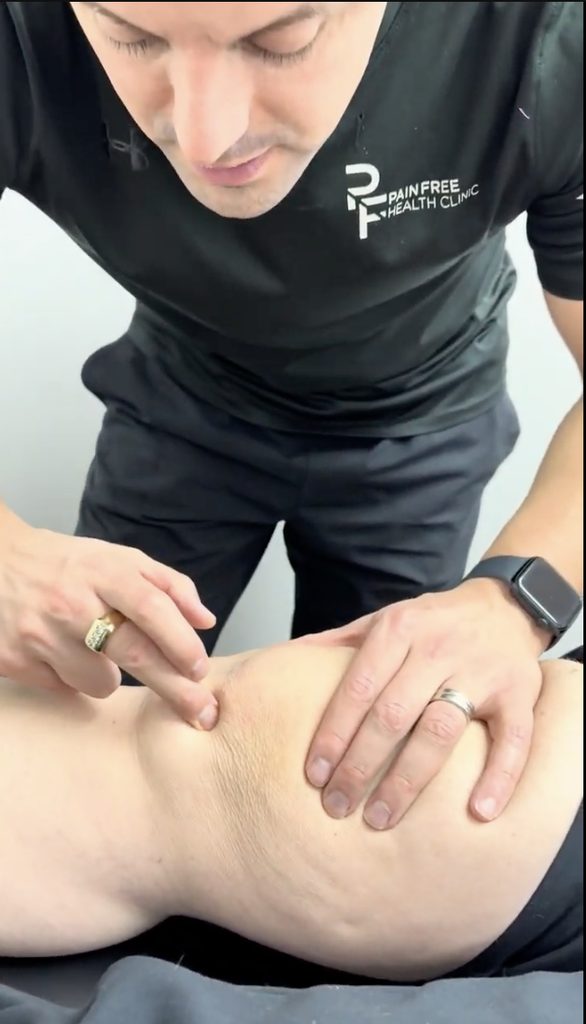
Patellar mobilization involves gently moving the kneecap in specific directions to assess and, when appropriate, improve its mobility.
The technique uses gentle, controlled movement rather than simply trying to make the kneecap move as much as possible.
Why Can Patellar Mobility Matter?
Restricted patellar movement can sometimes be one factor associated with:
During an assessment or rehabilitation, a clinician may check how well the patella moves to determine whether patellar mobility should be addressed as part of treatment.
More Movement Isn't Always Better
There is an important distinction when discussing patellar mobilization:
The goal isn't MORE movement. It's appropriate movement.
Patellar mobilization isn't about making the kneecap as loose as possible. The goal is to have appropriate movement for that individual knee.
Not every painful knee needs patellar mobilization, which is why the technique should be based on what is found during an assessment rather than used automatically.
Your Kneecap Moves Too
The kneecap may be small, but its movement is part of normal knee mechanics.
As your knee bends and straightens, the patella glides within its groove. When that movement is restricted, assessing patellar mobility may help clinicians better understand one potential contributor to knee stiffness or limited movement.
Your kneecap moves too—and that movement can matter.
Need Help with Knee Stiffness or Limited Mobility?
If you're experiencing ongoing knee stiffness, limited movement, or difficulty during your recovery, an assessment can help determine what may be contributing to the problem and whether patellar mobility should be addressed as part of your rehabilitation.
📍 Richmond
📍 Ladner
📍 Surrey
📍 Langley
Watch the Video
See how patellar mobilization uses gentle, controlled movement to assess and, when appropriate, work on kneecap mobility.
Learn More About Knee Mobility and Rehabilitation
Follow Pain Free Health Clinic on YouTube, Instagram, Facebook, and TikTok for more educational content on patellar mobilization, knee mobility, knee stiffness, knee rehabilitation, range of motion, knee pain, physiotherapy, and injury recovery to help you move with confidence.


