The connection between the scapula, rib cage and athletic performance
Why the shoulder, neck, rib cage and breathing system need to be examined together
Athletes often think of an injury as belonging to one specific body part. A shoulder injury is treated as a shoulder problem.
A tight hip is treated as a hip problem. A calf strain is treated as a calf problem.
But the human body does not work in isolated parts. It works through interconnected muscular and fascial chains. When one area becomes overloaded or dysfunctional, another area may have to compensate.
The Body Was Compensating
Recently, I worked with a 43-year-old highly athletic patient who participates in skiing, surfing and tennis and had previously undergone shoulder surgery for a Bankart lesion.
He initially presented with calf discomfort, but his assessment revealed something much more interesting. Rather than looking only at the painful calf, we assessed his overall movement patterns.
We found significant restrictions through the hips, increased workload through his muscular and fascial sling system, and altered mechanics around the shoulder and thoracic region. His right side appeared to be doing considerably more work than the other side.
The Long Thoracic Nerve and the Serratus Anterior
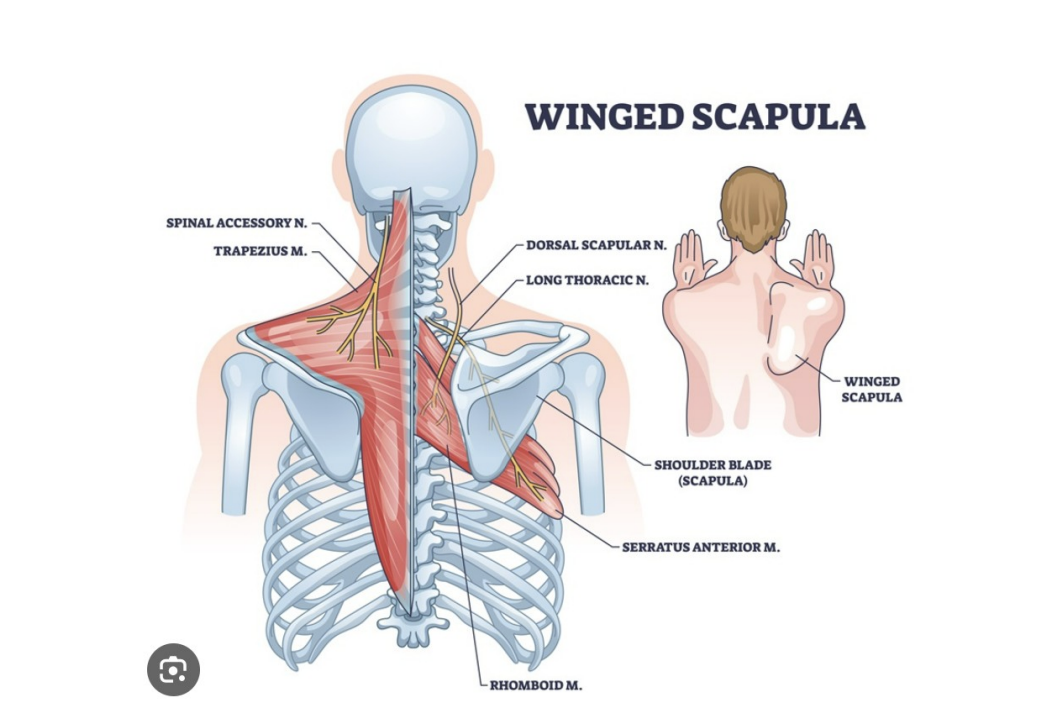
One structure we pay close attention to when evaluating scapular mechanics is the long thoracic nerve. The long thoracic nerve supplies the serratus anterior muscle, which plays an important role in controlling the position and movement of the scapula against the rib cage.
When serratus anterior function is impaired, the shoulder blade may move abnormally and can contribute to a presentation commonly known as scapular winging.
The serratus anterior also has an important relationship with the rib cage and can contribute to respiratory mechanics, particularly during more forceful breathing.
Why Breathing Changed During Treatment
As we worked through the muscles surrounding his ribs and thoracic region, the patient reported something we weren't specifically treating: “I can breathe better.”
Improving mobility and muscular coordination around the rib cage may allow the chest wall and scapula to move more efficiently during respiration. For an athlete, breathing efficiency matters.
Running, tennis, surfing and skiing all require the body to coordinate breathing with movement while maintaining stability through the trunk and shoulder girdle. If the rib cage, thoracic spine and shoulder complex aren't moving efficiently, the athlete may compensate by increasing the workload of other muscles.
The important point
A breathing complaint doesn't always begin with the lungs.
Sometimes, the musculoskeletal system surrounding the rib cage and shoulder complex deserves to be evaluated as part of the bigger picture. This does not mean every breathing problem is caused by a musculoskeletal issue.
Respiratory and cardiovascular causes must always be considered and appropriately ruled out when indicated.
Looking Beyond the Painful Area
One of the biggest mistakes we can make in sports rehabilitation is treating only where the athlete feels pain.
The calf may be painful. But why is the calf working so hard?
The shoulder may be unstable. But how is the scapula moving?
The hips may feel tight. But what is happening through the thoracic spine and rib cage?
And how are all of these areas communicating during movement?
This is where a whole-body assessment becomes valuable.
For athletes, we should be asking
Your Shoulder Is Connected to the Rest of Your Body
A shoulder surgery can successfully repair a structural injury, but returning an athlete to high-level performance requires more than looking at the repaired structure.
The surrounding muscles, scapula, neck, thoracic spine, rib cage, hips and lower extremities all contribute to how the athlete moves.
That is why athletes who participate in high-demand sports such as tennis, skiing, surfing and other rotational or overhead activities may benefit from a comprehensive assessment rather than simply treating the location of their pain.
At Pain Free Health, our goal is to look beyond the painful area and understand why the body is compensating in the first place. Sometimes the key to improving a calf isn't found in the calf. Sometimes the key to improving shoulder function isn't found only in the shoulder.
The body works as a system. And the right assessment can help uncover the connections.
Need Help with Shoulder Dysfunction or Sports Injuries?
If you're experiencing ongoing shoulder pain, restricted movement, sports-related discomfort, or difficulty returning to your usual activities, our team can assess how your shoulder and surrounding areas are functioning together.
At Pain Free Health, our approach may consider the shoulder, scapula, neck, thoracic spine, rib cage, hips, and overall movement patterns depending on your individual presentation.
📍 Richmond
📍 Ladner
📍 Surrey
📍 Langley
Pain Free Health
Chiropractic • Physiotherapy • RMT • Kinesiology • Acupuncture
Clinical note: Calf pain following surgery or during recovery should be appropriately medically assessed, particularly if accompanied by swelling, warmth, redness, significant tenderness or shortness of breath, to rule out potentially serious vascular complications.


