Learn how six basic Pilates exercises can help improve your strength, balance, flexibility, and stability. From leg presses and Cossack squats to core anti-rotations, these movements target different muscle groups to support better movement, improve body control, and help you move with more confidence during everyday activities.
Want to Build a Stronger Body and Move With More Confidence?
Your body relies on strength, balance, mobility, and coordination to perform everyday movements. Whether you're walking, climbing stairs, bending, lifting, or participating in sports, different muscle groups work together to help you move efficiently.
When certain muscles lack strength or when your body has limited mobility and control, some movements may become more challenging. This is why incorporating appropriate strengthening and mobility exercises into your routine can be an important part of maintaining physical function.
Clinical Pilates is one approach that combines controlled movements, strength training, flexibility, and body awareness. It can help you work on different areas of physical fitness while focusing on proper movement and control.
In this guide, we'll explore six basic Pilates exercises that target the lower body, hips, glutes, shoulders, and core. Each exercise offers different benefits that can support strength, stability, and everyday movement.
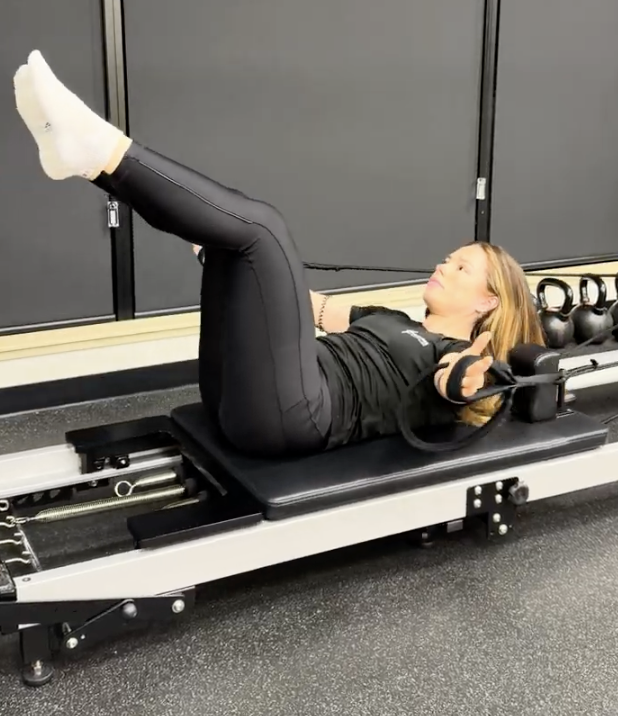
What Are the Benefits of Pilates for Strength and Injury Prevention?
Pilates focuses on controlled movement, muscle engagement, posture, balance, and body awareness. Depending on the exercises selected and your individual needs, a Pilates routine can support several aspects of physical fitness.
Some potential benefits include:
These benefits may contribute to better physical function and help support injury prevention. However, Pilates does not guarantee that injuries will be prevented. Exercise selection, proper technique, gradual progression, and individual physical needs all matter.
6 Basic Pilates Exercises to Help Build Strength and Stability
Here are six exercises that target different areas of the body and support important movement patterns.
1. Leg Press
Main benefits: Leg strength and knee stability
The leg press is a strengthening exercise that targets the muscles of the lower body, particularly the quadriceps, hamstrings, and glutes, depending on the movement and equipment used.
Developing strength in these muscle groups can help support movements such as walking, standing up from a chair, and climbing stairs. Stronger muscles around the knee also contribute to the support and control needed during lower-body activities.
Why it matters:
2. Cossack Squat
Main benefits: Hip mobility and flexibility
The Cossack squat is a side-to-side squat variation that challenges hip mobility, lower-body strength, and flexibility. It involves bending one knee while extending the opposite leg, allowing you to work through a lateral movement pattern.
Unlike traditional forward-facing squats, this exercise encourages movement in the frontal plane, which is important for activities that involve stepping sideways, changing direction, and shifting your weight from one leg to another.
Why it matters:
3. Four-Point Kickback
Main benefits: Glute strength and hip control
The four-point kickback is performed from a hands-and-knees position. From this position, one leg moves backward while the hips and trunk remain as controlled as possible.
This exercise primarily targets the gluteal muscles, which play an important role in hip extension and pelvic control. Strong glutes help support movements such as walking, climbing stairs, and standing from a seated position.
Why it matters:
4. Reverse Lunge
Main benefits: Balance and leg strength
The reverse lunge is a single-leg strengthening exercise that involves stepping one foot backward while bending the front knee and lowering the body.
It challenges several lower-body muscle groups, including the quadriceps, glutes, and hamstrings. Because the exercise involves shifting your weight and maintaining balance, it also challenges coordination and control.
Why it matters:
5. Pike Pull Downs
Main benefits: Core strength and shoulder stability
Pike pull downs combine core engagement with controlled upper-body movement. The exercise challenges your ability to maintain body alignment while coordinating movement through the shoulders and trunk.
Depending on the equipment and variation used, it can also challenge the muscles involved in shoulder control and stabilization.
Why it matters:
6. Core Anti-Rotations
Main benefits: Core strength and trunk stability
Core anti-rotation exercises train your body to resist unwanted twisting movements. They commonly involve applying resistance from one side while keeping the trunk stable and maintaining a controlled position.
These exercises target the muscles responsible for stabilizing the spine and pelvis. They can help develop the control needed during activities that involve reaching, lifting, carrying, and changing positions.
Why it matters:
How Often Should You Do Pilates Exercises?
The right Pilates routine depends on your current fitness level, physical condition, goals, and exercise experience.
If you're new to Pilates, start with exercises that match your current abilities. Focus on controlled movements and proper technique rather than trying to complete more repetitions or use greater resistance right away.
Here are a few things to keep in mind:
If you have an existing injury, recurring pain, or difficulty performing certain movements, consult a qualified healthcare professional before starting a new exercise routine.
Why Consider Clinical Pilates?
Clinical Pilates uses Pilates-based movements as part of an individualized approach to exercise and rehabilitation. It may be incorporated into a treatment or exercise plan depending on a person's movement limitations, physical needs, and goals.
Unlike following a general online workout, working with a qualified professional allows exercises to be selected and modified based on your abilities and progress.
At Pain Free Health Clinic, Clinical Pilates can be part of a broader approach to improving strength, mobility, stability, and movement control.
Whether you're looking to build strength, improve flexibility, or work on your movement patterns, an appropriate exercise program can help you work toward your individual goals.
Looking for Physiotherapy in Newton, Surrey, BC?
Pain Free Health Clinic is also preparing to expand to Newton, near 128th Street and 76 Avenue in Surrey, BC.
The upcoming Newton clinic is planned to offer:
Follow Pain Free Health Clinic for updates on our upcoming Newton location and more information about our services.
Visit Pain Free Health Clinic to learn more.
Move Better. Feel Better. Live Pain Free.
Watch the Video
Watch our video featuring 6 Basic Pilates Exercises to Help Bulletproof Your Body Against Injury.
Follow along as we demonstrate the leg press, Cossack squat, four-point kickback, reverse lunge, pike pull downs, and core anti-rotations.
Learn More About Pain Free Health Clinic
Follow Pain Free Health Clinic on YouTube, Instagram, Facebook, and TikTok for more educational content on Clinical Pilates, Pilates exercises, injury prevention, core strengthening, mobility training, physiotherapy, and movement health.


