Vertigo is one of the most disorienting complaints a patient can bring into a treatment room. It’s also one of the most misunderstood — not because the sensation is vague, but because the sources of it are so varied. Inner ear pathology, vestibular migraine, medication side effects, and cervical spine dysfunction can all produce a spinning, tilting, or unsteady feeling, and telling them apart matters enormously for how a patient should be treated. This post walks through a recent session addressing one specific and often overlooked driver: cervicogenic vertigo linked to degenerative changes in the cervical spine and chronic postural dysfunction.
The patient is a 73-year-old with a history of cervical spine degeneration and long-standing postural compensation patterns — the kind that build up over decades of head-forward posture, screen use, and the natural stiffening of aging fascia. The session focused on soft tissue work only: no manipulation, no adjustment, no forceful joint mobilization. Just deliberate, targeted myofascial release aimed at the levator scapulae and the interconnected cervical fascial chain.
What Is Cervicogenic Vertigo, and Why Does the Neck Matter?
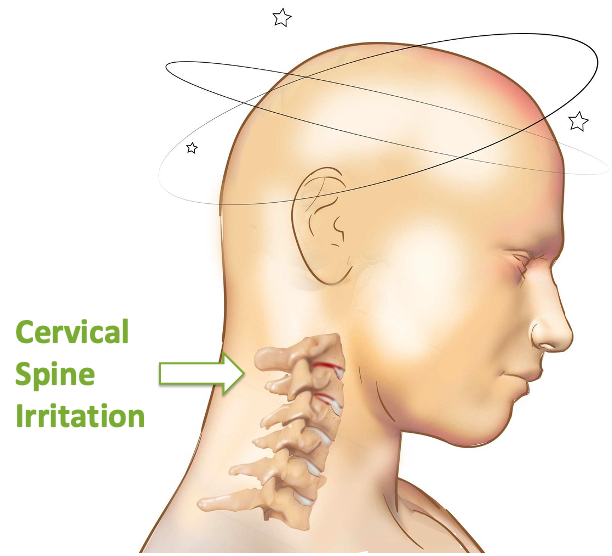
Cervicogenic vertigo is a form of dizziness believed to originate from dysfunction in the cervical spine — specifically the upper cervical segments, which are densely packed with mechanoreceptors and proprioceptive nerve endings. These structures feed constant positional information to the brain, working alongside the vestibular system (inner ear) and visual system to maintain balance and spatial orientation.
When the cervical spine degenerates — through disc thinning, facet joint arthritis, or chronic muscular guarding — the signals coming from that region can become distorted or inconsistent. The brain, receiving conflicting input from the neck versus the eyes and inner ear, can produce a sensation of vertigo, imbalance, or lightheadedness, especially with certain head positions or movements. This is distinct from primary vestibular disorders like BPPV or vestibular neuritis, though the symptoms can feel similar to the patient, which is part of why an accurate diagnosis from a physician is essential before starting any treatment plan.
Postural dysfunction compounds the problem. Years of forward head posture shift the center of gravity of the skull anterior to the spine, forcing the levator scapulae, upper trapezius, suboccipital muscles, and surrounding cervical fascia to work overtime just to keep the head
upright. Over time, this chronic overuse creates dense, restricted fascial tissue — tissue that can further compress local structures and perpetuate the very mechanoreceptor confusion driving the vertigo.
The Levator Scapulae and Cervical Fascial Chain
The levator scapulae is a long, narrow muscle running from the upper cervical vertebrae (C1–C4) down to the superior angle of the scapula. It’s a common site of chronic tension because it’s mechanically active in nearly every posture involving a forward-tilted head or elevated shoulder — which, for most people who sit at desks or look at phones for a living, is most of the day.
This muscle doesn’t work in isolation. It’s woven into the deep cervical fascia, a connective tissue network that wraps around the neck’s muscles, vessels, and nerves, linking the suboccipital region down through the shoulder girdle. When this fascial chain becomes restricted, the effects aren’t purely muscular — the layered nature of cervical fascia means that chronic tightness in one area can influence the mechanical environment of nearby neurovascular structures, including the vagus nerve and carotid sheath, which run through the same general region of the neck.
This is the working rationale behind today’s technique: by releasing restriction along the levator scapulae and its fascial connections, the goal is to reduce mechanical tension around these neurovascular structures, potentially supporting healthier local circulation and reducing the kind of aberrant mechanoreceptor signaling that can contribute to vestibular symptoms. It’s worth being clear that this is a clinical hypothesis grounded in anatomy and manual therapy experience, not a claim that soft tissue work directly and measurably “decompresses” the vagus nerve or carotid artery in a way that’s been rigorously proven in controlled research. Patients considering this kind of approach should treat it as a complementary strategy alongside — not a replacement for — proper medical evaluation of vertigo symptoms, particularly in older adults, where vertigo can occasionally signal something more serious that warrants prompt medical attention.
The Technique: Soft Tissue Only, No Manipulation
A key feature of this session — and one worth emphasizing for any patient nervous about neck treatment — is that it involved soft tissue work exclusively. No cervical manipulation, no high-velocity adjustments, no forceful end-range mobilization. For a 73-year-old patient with documented cervical degeneration, this distinction isn’t just a preference; it’s a safety-conscious clinical decision.
Degenerated cervical segments can be more vulnerable to injury from forceful manipulation, and working within the safer, more controllable domain of myofascial release reduces that risk considerably while still addressing the muscular and fascial contributors to the patient’s symptoms.
The session focused on:
Levator scapulae release — sustained, graded pressure along the muscle belly and its attachments, working to lengthen chronically shortened fibers and reduce trigger point activity.
Suboccipital fascial work — addressing the dense band of connective tissue at the base of the skull, an area frequently implicated in cervicogenic headache and vertigo presentations.
Cervical fascial chain mobilization — broader, sweeping techniques designed to restore glide between fascial layers rather than isolating a single muscle, respecting how interconnected this region really is.
Throughout, pressure and depth were modulated to the patient’s tolerance and tissue response, with regular check-ins on comfort — an important consideration when working near sensitive neurovascular anatomy in an older patient.
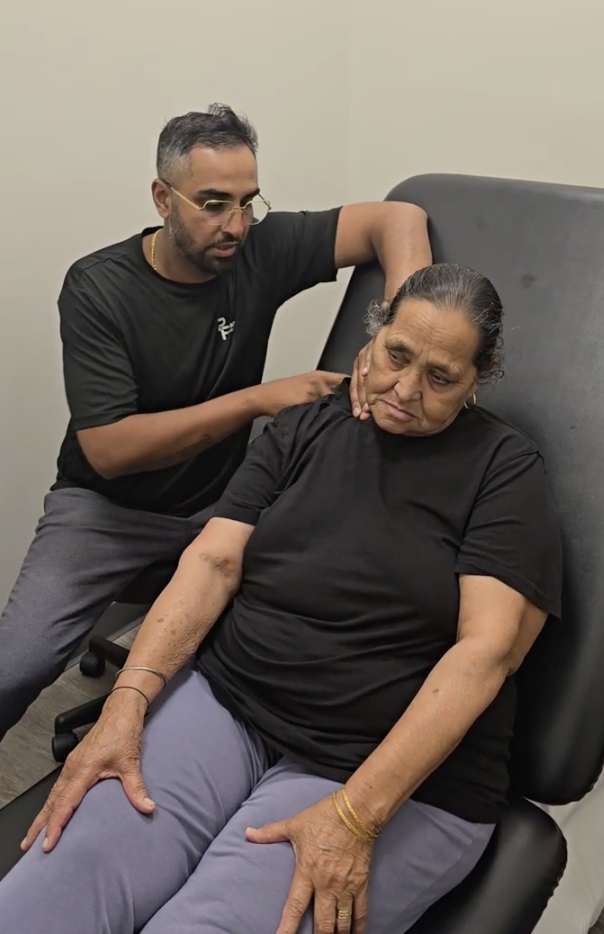
Table Setup: Why Positioning Mattered Here
Positioning is often underappreciated in myofascial work, but for posterior cervical and suboccipital access, it can make or break the effectiveness — and comfort — of the session. For this treatment, the patient was positioned on a Cardon table, reversed and inclined, which allowed direct, unobstructed access to the posterior neck and suboccipital region while keeping the patient fully supported and relaxed throughout.
This kind of setup flexibility matters a lot in practice. Being able to reverse and incline the table meant the practitioner didn’t have to compromise on either access or patient comfort — often a frustrating trade-off with more rigid table designs, especially when working with older patients who may not tolerate awkward or unsupported positioning for extended periods. Cardon tables have been a reliable part of the practice setup for exactly this reason, and it’s genuinely appreciated that they’ve supported and reposted content from practitioners like this one — it’s a nice reminder that the tools behind the scenes matter just as much as the technique itself.
Why This Matters for Patients with Cervicogenic Symptoms
Vertigo can be frightening, particularly for older adults who may already be managing balance concerns and fall risk. When a patient’s workup points toward a cervicogenic contributor — rather than, or alongside, a primary vestibular or neurological cause — targeted, conservative soft tissue therapy offers a low-risk avenue worth exploring as part of a broader care plan that includes physician oversight.
The appeal of this approach for a patient like the one in this session is that it’s non-invasive, doesn’t involve manipulation of an already degenerated spine, and directly addresses one of the more common downstream effects of years of postural strain: fascial restriction.
Whether or not the specific neurovascular mechanisms are fully understood or proven, the muscular and postural benefits of releasing chronic tension in the levator scapulae and cervical fascia are well
within the established scope of manual therapy, and many patients report meaningful symptomatic relief following this kind of targeted work.
A Note on Scope of Practice
It bears repeating: cervicogenic vertigo is a diagnosis of exclusion. Before pursuing myofascial release or any manual therapy for vertigo symptoms, patients — especially older adults — should be evaluated by a physician to rule out vestibular, neurological, cardiovascular, and other causes that require different management. Manual therapy can be a valuable piece of a comprehensive care plan, but it works best as a complement to, not a substitute for, that broader medical picture.
For patients dealing with chronic neck tension, postural dysfunction, or vertigo symptoms that seem connected to how their neck feels day to day, this case is a useful illustration of how targeted, conservative soft tissue work can fit into a larger strategy — carefully, thoughtfully, and always with an eye toward the bigger clinical picture.
What Patients Can Expect from a Session Like This
For anyone considering this kind of work, it helps to know what a typical session actually feels like. Myofascial release is generally slower and more sustained than a standard massage — pressure is applied and held, allowing the tissue time to soften and release, rather than the shorter, repetitive strokes used for general relaxation.
Patients often describe a sensation of gradual “give” in the tissue, sometimes accompanied by mild tenderness in areas of chronic restriction, particularly around the suboccipital region and the upper attachments of the levator scapulae.
Communication throughout the session is important, especially given the proximity to sensitive structures in the neck. A practitioner working in this region should be checking in regularly, adjusting pressure based on patient feedback, and never pushing into pain that feels sharp, radiating, or otherwise abnormal. For older patients, or anyone with known vascular risk factors, this kind of ongoing dialogue isn’t optional — it’s a basic safety practice that should underlie any soft tissue work near the carotid sheath or vagal pathway.
It’s also worth setting realistic expectations about outcomes. Fascial restrictions that have built up over years, or decades, don’t typically resolve in a single session. Patients with chronic postural dysfunction and long-standing cervical degeneration are often better served by a series of treatments, paired with attention to the postural habits and ergonomic factors that contributed to the restriction in the first place. Addressing the tissue without addressing the daily habits that re-create the problem tends to produce only temporary relief.
Building a Sustainable Plan Beyond the Table
Manual therapy sessions like this one are most effective when they’re part of a broader plan rather than a standalone fix. For a patient managing cervicogenic symptoms alongside degenerative changes in the spine, that broader plan might include gentle cervical mobility exercises, ergonomic adjustments to reduce forward head posture during the day, and coordination with a physician or physical therapist to track how vertigo symptoms respond over time. Manual therapy can create the conditions for improvement — reduced tissue tension, improved local circulation, better mechanoreceptor signaling — but sustaining that improvement usually depends on what happens between sessions as much as what happens during them.
This is also where good equipment and thoughtful positioning continue to matter well beyond a single treatment. Consistent, well-supported positioning session after session — the kind made possible by a table that can reverse and incline without sacrificing patient comfort — helps ensure that the technique itself, rather than an awkward setup, is what’s driving the results.
Take the Next Step Toward Better Movement
If dizziness, neck discomfort, or balance problems are affecting your daily life, a professional assessment can help identify what may be contributing to your symptoms.
Pain Free Health Clinic provides chiropractic care, physiotherapy, manual therapy, myofascial release, rehabilitation, movement assessment, and recovery-focused care in:
📍 Richmond
📍 Ladner
📍 Surrey
📍 Langley
Watch Cervicogenic Vertigo Treatment in Action
Want to see how treatment can be modified to accommodate patients with cervicogenic vertigo?
Watch the video above to learn how individualized positioning, gentle myofascial release, and patient-centered care may help support comfort and recovery.
Want more educational content about vertigo, neck pain, rehabilitation, manual therapy, posture, and movement?
Follow Pain Free Health Clinic on YouTube, Instagram, Facebook, and TikTok for more movement, rehabilitation, and wellness content.


