Dry needling helps release deep hip muscle tension, improve mobility, and reduce pain. Learn how physiotherapy treatments target trigger points to support recovery and restore hip function.
Why Dry Needling Helps Hip Muscle Tension
Hip tightness and muscle pain are common issues affecting people of all activity levels. Whether caused by prolonged sitting, sports activity, or repetitive movements, tight hip muscles can limit mobility and contribute to discomfort in the hips, lower back, and even the knees.
While stretching and massage may provide temporary relief, deeper muscle trigger points can remain active and continue to cause tension.
One treatment used in physiotherapy to address deep muscle tension is dry needling. This technique targets trigger points within the muscles to help reduce tightness, improve circulation, and restore normal movement patterns.
When combined with physiotherapy rehabilitation, dry needling can help reduce hip discomfort and support long-term recovery.
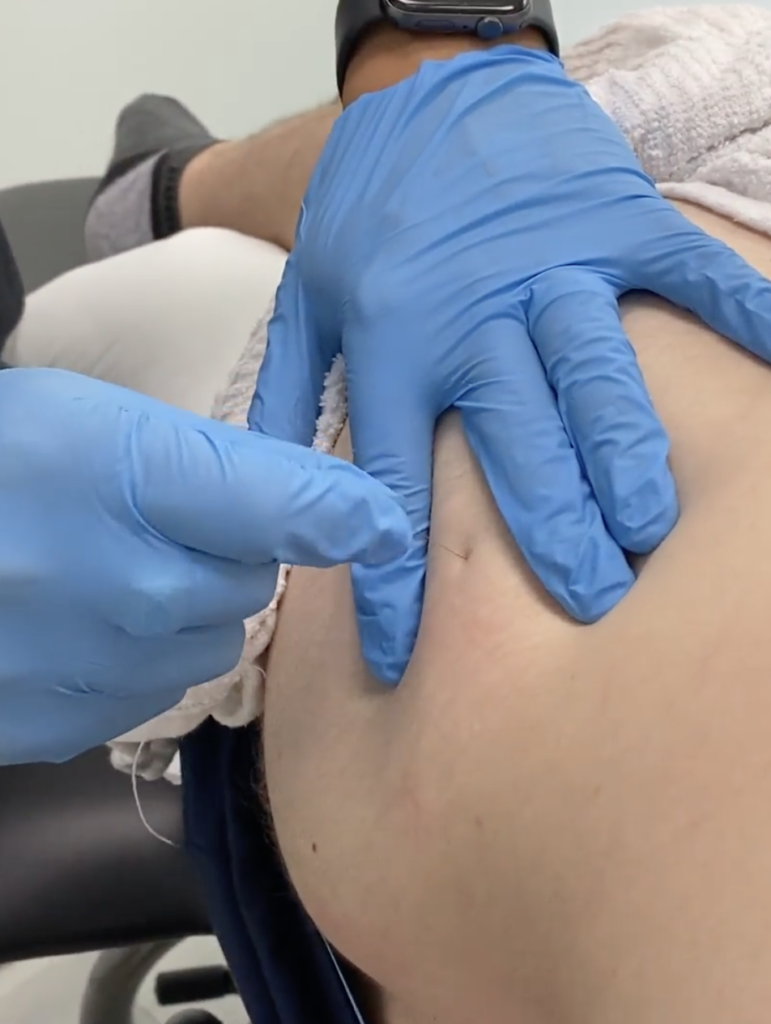
What Causes Hip Muscle Pain?
The hip joint is surrounded by several large muscles that help stabilize the pelvis and control movement of the legs. These muscles can become overloaded due to daily activities and repetitive strain.
Common causes of hip muscle tension include:
• Prolonged sitting or desk work
• Running or sports activities
• Muscle imbalances around the pelvis
• Poor posture or movement mechanics
• Overuse from exercise or physical work
• Weak core or glute muscles
When these muscles become tight or develop trigger points, they can contribute to hip discomfort and restricted movement.
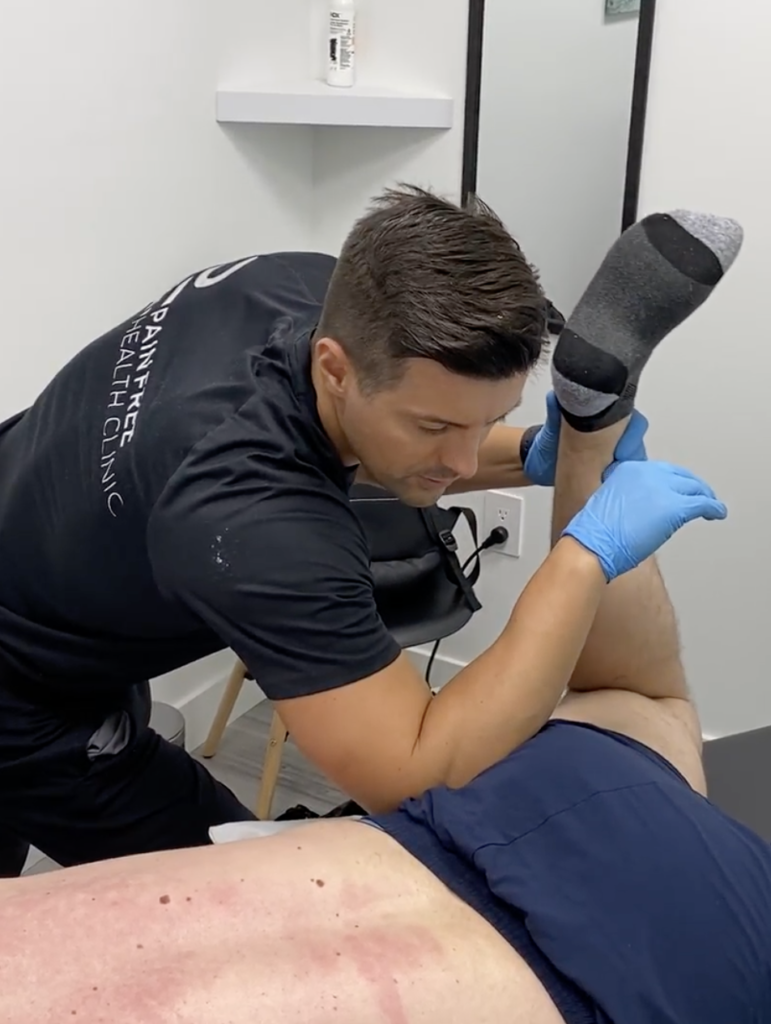
Common Hip Muscles That Develop Trigger Points
Several muscles around the hip can develop tension and trigger points.
These commonly include:
• Gluteus medius – helps stabilize the pelvis during walking and running
• Gluteus maximus – responsible for hip extension and power movements
• Piriformis – assists with hip rotation and stabilization
• Tensor fasciae latae (TFL) – supports hip movement and connects to the IT band
• Deep hip rotator muscles – stabilize the hip joint during movement
When these muscles become tight or irritated, they can affect how the hip moves and may contribute to discomfort in surrounding areas.
What Is Dry Needling?
Dry needling is a physiotherapy treatment used to target trigger points within muscles using a thin, sterile needle.
Unlike acupuncture, which is based on traditional Chinese medicine principles, dry needling focuses on treating muscle dysfunction and neuromuscular trigger points.
This tool can be used by physiotherapists and chiropractors as part of a treatment plan to help restore normal muscle function.
Dry needling helps:
• Release muscle trigger points
• Reduce deep muscle tension
• Improve blood circulation
• Restore normal muscle activation
• Improve joint mobility
The needles stimulate a local twitch response in the muscle, which helps the muscle relax and return to a healthier resting state.
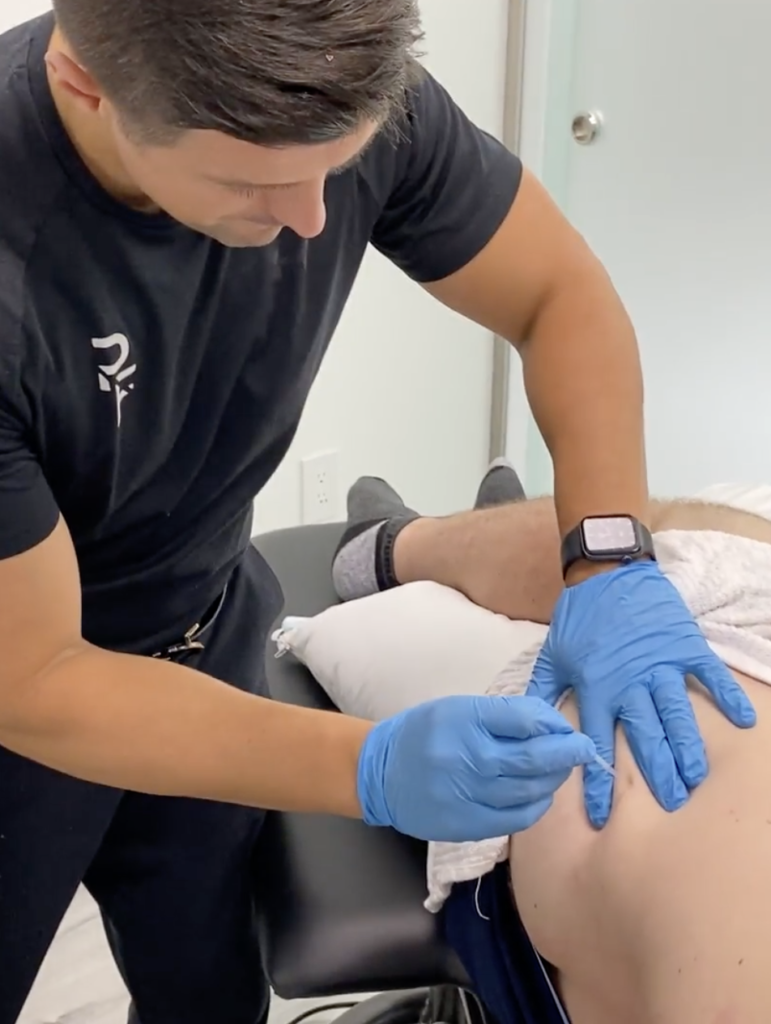
Why Dry Needling Helps Hip Muscle Pain
1. Releases Deep Muscle Trigger Points
Trigger points within the hip muscles can create persistent tightness and discomfort. Dry needling helps deactivate these trigger points.
2. Improves Blood Flow to Muscles
Stimulating the muscle helps increase circulation, which supports the body’s natural healing process.
3. Reduces Muscle Guarding
Tight muscles often remain contracted due to protective guarding. Dry needling helps reset the muscle’s normal resting tone.
4. Improves Hip Mobility
When muscle tension decreases, the hip joint can move more freely during walking, sitting, and physical activity.
Why Physiotherapy Is Important
Although dry needling can help release muscle tension, hip pain is often influenced by multiple factors such as:
• Weak glute muscles
• Core instability
• Poor movement mechanics
• Limited hip mobility
• Overuse from sport or work
A physiotherapist evaluates these factors to create a treatment plan that addresses the underlying cause of the problem.
Who Can Benefit From Dry Needling for the Hip?
Dry needling may benefit individuals experiencing:
• Hip muscle tightness
• Glute pain or trigger points
• Deep hip discomfort
• Piriformis-related symptoms
• Lower back pain related to hip tension
• Limited hip mobility during movement
A physiotherapist will determine whether dry needling is appropriate for your condition.
Final Thoughts
Hip pain and tightness are often influenced by deep muscle tension and movement imbalances. Dry needling helps release trigger points within the hip muscles, allowing the muscles to relax and function more normally.
When combined with physiotherapy exercises and movement-based rehabilitation, dry needling can help improve hip mobility, reduce discomfort, and support long-term recovery.At Pain Free Health Clinic, our goal is to help patients move more comfortably and return to their daily activities with improved hip function.
Take the Next Step Toward Hip Pain Relief
If hip tension or discomfort is affecting your daily activities, a physiotherapy assessment can help identify the underlying cause and guide the most effective treatment plan.
Dry needling combined with physiotherapy may help reduce muscle tension and restore normal hip movement.
Pain Free Health Clinic provides physiotherapy services in:
Richmond
Ladner
Surrey
Langley
Book your physiotherapy assessment today and start moving pain-free again.
Want to see how dry needling works?
Watch our demonstration videos showing how dry needling helps release hip muscle tension and improve mobility.
Follow Pain Free Health Clinic on YouTube, Instagram, Facebook, and TikTok for more physiotherapy tips and treatment demonstrations.


