Learn four hip exercises that target mobility, strength, pelvic control, and stability to support better balance and everyday movement.
Stronger Hips Start with More Than One Exercise
Your hips play an important role in nearly every lower-body movement you make. From walking and climbing stairs to lifting, balancing, and exercising, healthy hip function requires more than strength alone.
A well-rounded approach to hip rehabilitation may include mobility, strength, stability, and movement control. Each component plays a different role in helping your hips and surrounding muscles work together efficiently.
Here are four exercises that target different aspects of hip function.
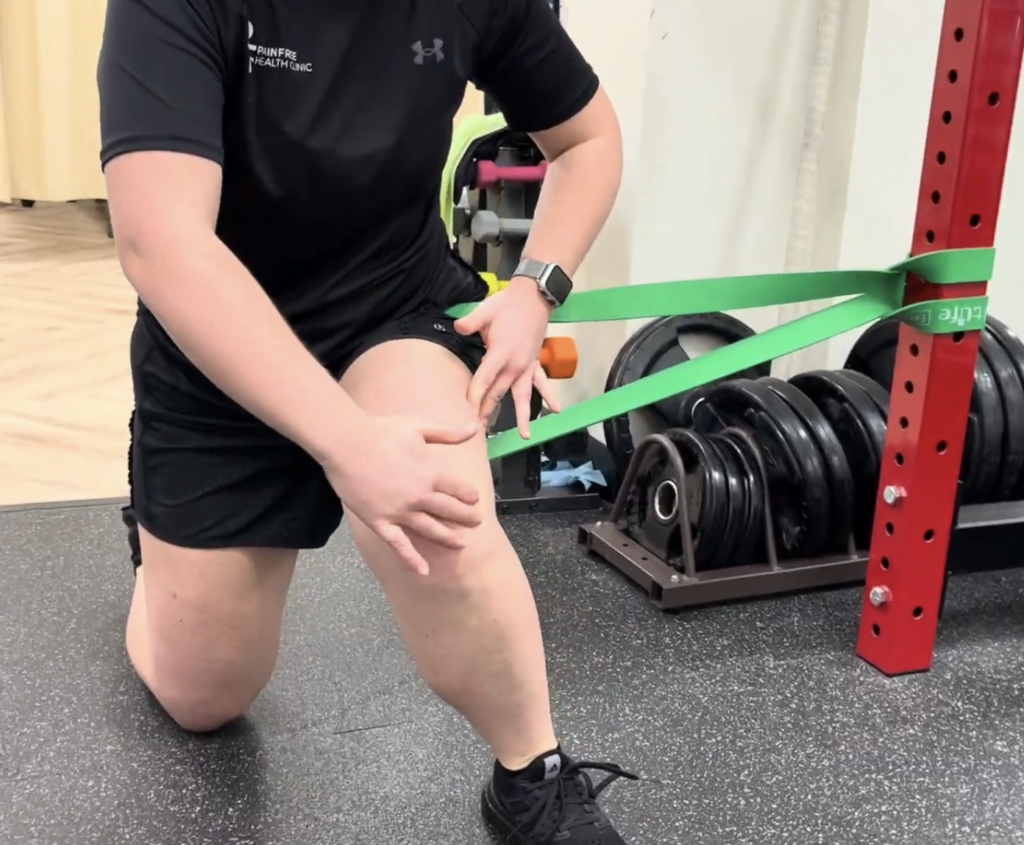
1. Hip Mobilization with Band
Hip mobility can influence how comfortably and efficiently you move through everyday activities.
A Hip Mobilization with Band uses resistance to assist movement at the hip joint and can be incorporated into a rehabilitation program to help improve available hip mobility.
Improving mobility can also help prepare the hip and surrounding muscles for strengthening and movement exercises.
2. Hip Hinge with Weights
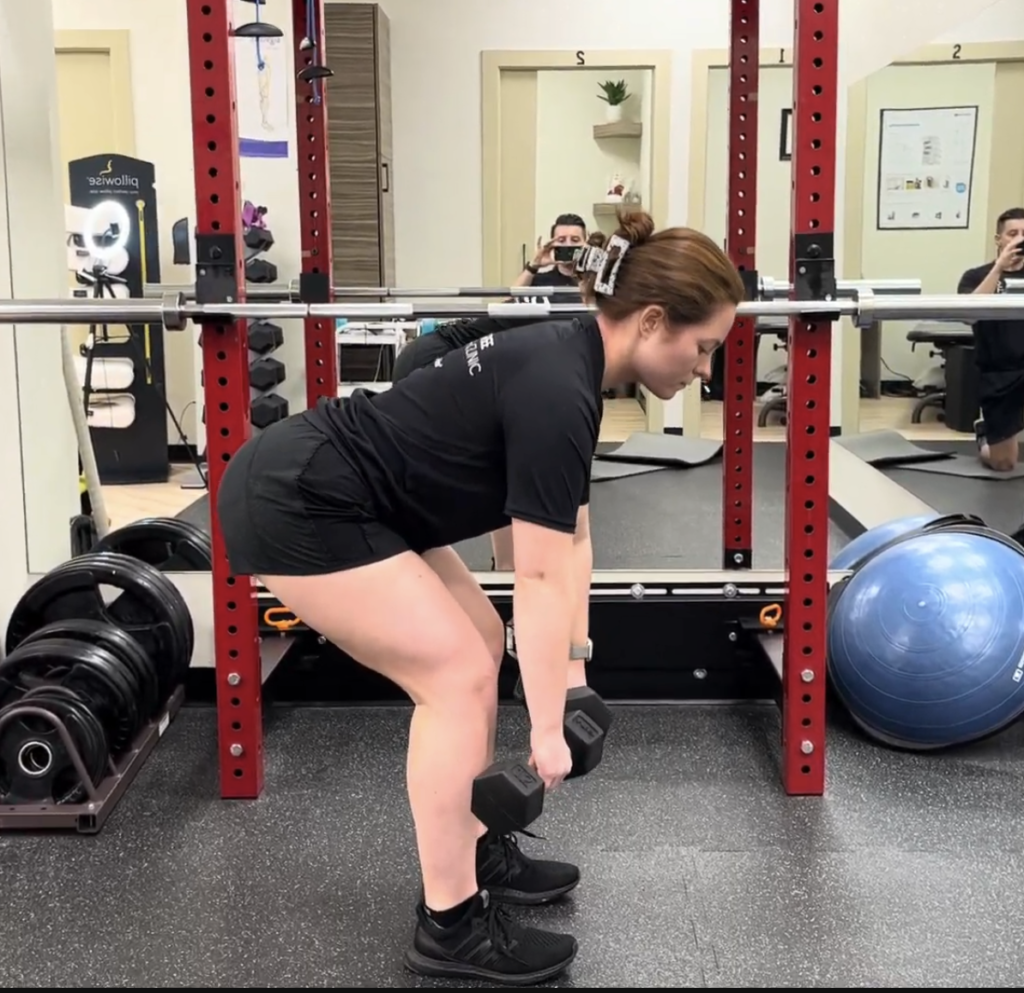
Once mobility has been addressed, strengthening exercises can help build your capacity for more demanding movements.
The Hip Hinge with Weights targets the glutes and posterior chain while reinforcing a movement pattern commonly used when bending and lifting.
This exercise may help:
3. Hip Hike
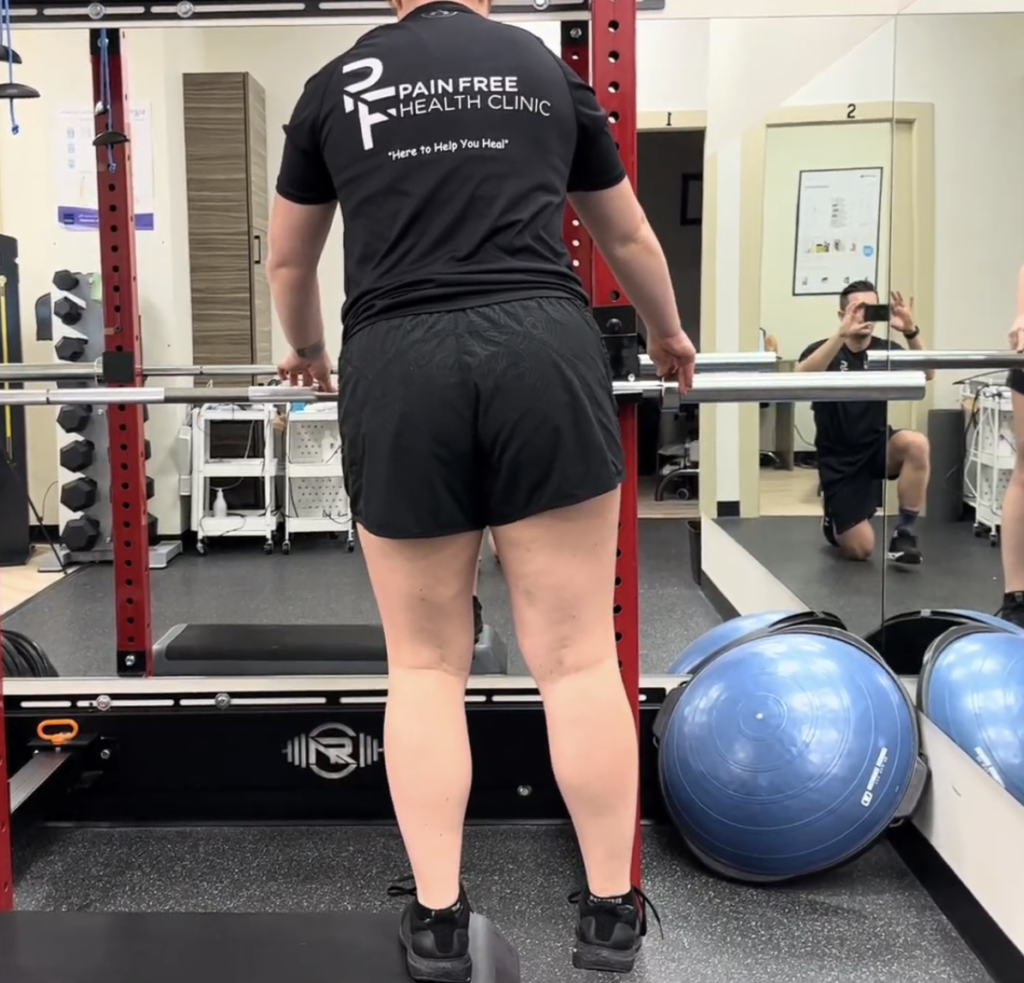
Hip strength isn't only important for producing movement. Certain muscles around your hips also help keep your pelvis stable.
The Hip Hike challenges these muscles and may help improve pelvic control and balance, particularly during walking and activities that require you to support your body on one leg.
Better pelvic control can contribute to more efficient lower-body movement during everyday activities.
4. Hip Stability Isometric
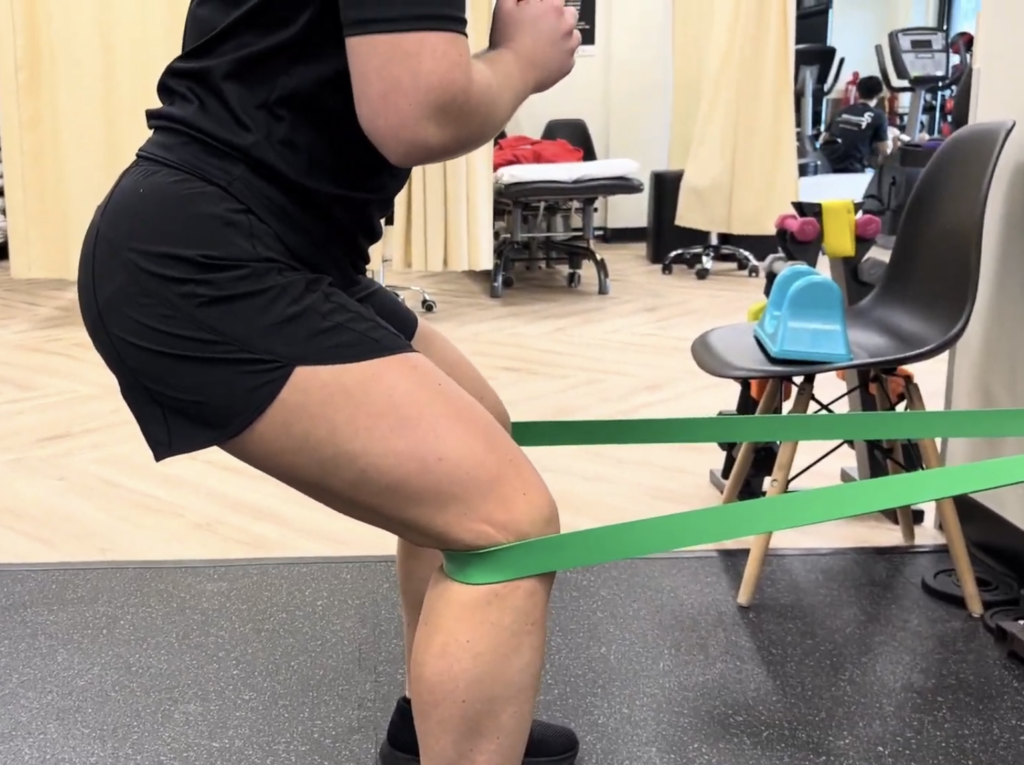
An isometric exercise challenges your muscles to produce force without significant movement at the joint.
A Hip Stability Isometric can help develop strength, control, and muscular endurance around the hip. This can be particularly useful when working on the ability to maintain a stable hip position during functional activities.
Why Hip Rehabilitation Should Include More Than Strength
Strong hips are important, but strength is only one part of healthy hip function.
Depending on your individual needs, a comprehensive hip rehabilitation program may work on:
Together, these components can support activities such as walking, lifting, climbing stairs, exercising, and maintaining balance.
The right combination of exercises will depend on your current mobility, strength, symptoms, injury history, and rehabilitation goals.
Need Help with Hip Pain, Weakness, or Balance?
If hip discomfort, weakness, or poor balance is affecting your everyday movement, our team can assess what's contributing to your symptoms and develop a personalized rehabilitation plan based on your needs and goals.
📍 Richmond
📍 Ladner
📍 Surrey
📍 Langley
Watch the Hip Exercise Video
Watch the video above to see four exercises targeting hip mobility, strength, pelvic control, and stability to support better everyday movement.
Learn More About Hip Health and Physiotherapy
Follow Pain Free Health Clinic on YouTube, Instagram, Facebook, and TikTok for more educational content on hip pain, hip mobility, hip strengthening, balance training, physiotherapy, exercise rehabilitation, and healthy movement to help you stay active and move with confidence.


