Knee pain when walking downstairs may involve more than the knee. Learn how hip, glute, calf, and ankle strength, mobility, and movement control can contribute to stair movement and how physiotherapy assessment can help.
Knee Pain Going Downstairs? The Knee May Not Be the Whole Story
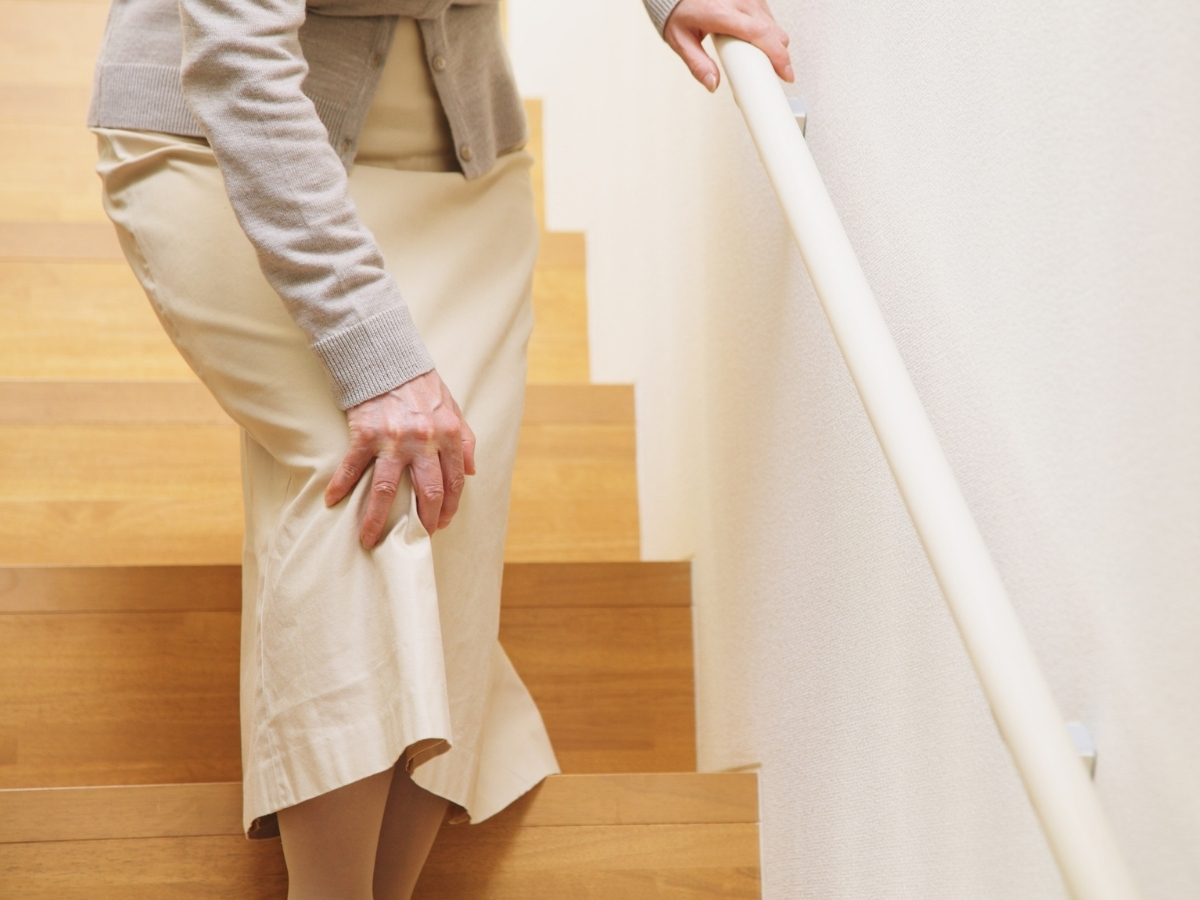
Does your knee hurt more when walking downstairs than when walking on level ground?
Going downstairs places different demands on the lower body. While you may feel the pain directly at the knee, the knee does not work in isolation. Your hips, glutes, calves, ankles, and knees all contribute to controlling your body as you descend each step.
This is why physiotherapy for knee pain may involve looking beyond the painful area.
Why Does My Knee Hurt Going Downstairs?
Walking downstairs requires your lower body to control your weight as you lower yourself from one step to the next.
This involves coordinated contributions from several areas, including:
If strength, mobility, or movement control is limited somewhere within this system, the way forces are managed through the lower body may change.
That doesn’t mean hip, calf, or ankle mechanics are always responsible for knee pain. Rather, these are factors a physiotherapist may consider as part of a broader assessment.
Why Physiotherapists Look Beyond the Painful Area
Where you feel pain and what is contributing to that pain are not always the same thing.
For example, someone experiencing knee pain on stairs may also have differences in:
A physiotherapy assessment can help identify which factors are relevant to the individual rather than assuming that every case of knee pain needs the same treatment.
What If My MRI Says “Bone on Bone”?
Imaging can provide useful information about the structure of the knee, but an MRI or X-ray is only one part of the clinical picture.
Imaging findings should be considered alongside your:
This is important because rehabilitation decisions generally should not be based on an imaging phrase alone.
If your imaging shows significant joint changes, your healthcare provider or physiotherapist can help explain what those findings mean in the context of your symptoms and function.
What Does a Knee Physiotherapy Assessment Look At?
If stairs are causing knee pain, your physiotherapist may assess more than just the knee.
Depending on your symptoms, an assessment may look at hip and glute strength, knee strength and range of motion, calf strength, ankle mobility, balance, walking mechanics, and how you perform stairs or other functional movements.
The goal is to understand how your lower body is currently moving and identify areas that may be appropriate to address during rehabilitation.
How Can Physiotherapy Help With Knee Pain on Stairs?
Your rehabilitation plan will depend on what is found during your assessment.
Treatment may incorporate:
Progressive Strengthening
Exercises may target the quadriceps, hips, glutes, calves, and other lower-body muscles depending on your individual needs.
Mobility Work
Limited movement at the knee, hip, or ankle may be addressed when relevant to your symptoms and function.
Movement-Based Rehabilitation
Your physiotherapist may work with you on movements related to your goals, including walking, stairs, squatting, and other everyday activities.
Stretching
Appropriate stretching may be included when specific mobility restrictions are identified.
The goal isn’t simply to strengthen everything around the knee. It’s to determine which factors matter in your case and build an individualized rehabilitation plan around them.
Need Help With Knee Pain Going Downstairs?
If knee pain is making stairs, walking, exercise, or everyday activities difficult, a physiotherapy assessment can help determine what may be contributing to your symptoms and what your next step could be.
📍 Richmond
📍 Ladner
📍 Surrey
📍 Langley
Watch the Video
Knee pain going downstairs? The knee may not be the whole story. Watch our physiotherapy team explain why the hips, glutes, calves, ankles, and overall movement mechanics may also be considered during a knee pain assessment.
Learn More About Knee Pain & Rehabilitation
Follow Pain Free Health Clinic on YouTube, Instagram, Facebook, and TikTok for more educational content on knee pain, knee rehabilitation, physiotherapy, knee strengthening, stair pain, lower-body biomechanics, movement assessment, and active rehabilitation to help you move with confidence.


