Learn how Shockwave Therapy and IMS may help address different contributors to shoulder pain by supporting tissue recovery, reducing muscle tension, and improving mobility.
Why Use Shockwave Therapy AND IMS for Shoulder Pain?
Shoulder pain isn't always caused by a single problem.
In many cases, pain and movement restrictions can involve both irritated tissues and tight or dysfunctional muscles. That's why treatment sometimes includes more than one approach to help address different contributing factors.
Two commonly used treatments are Shockwave Therapy and IMS (Intramuscular Stimulation).
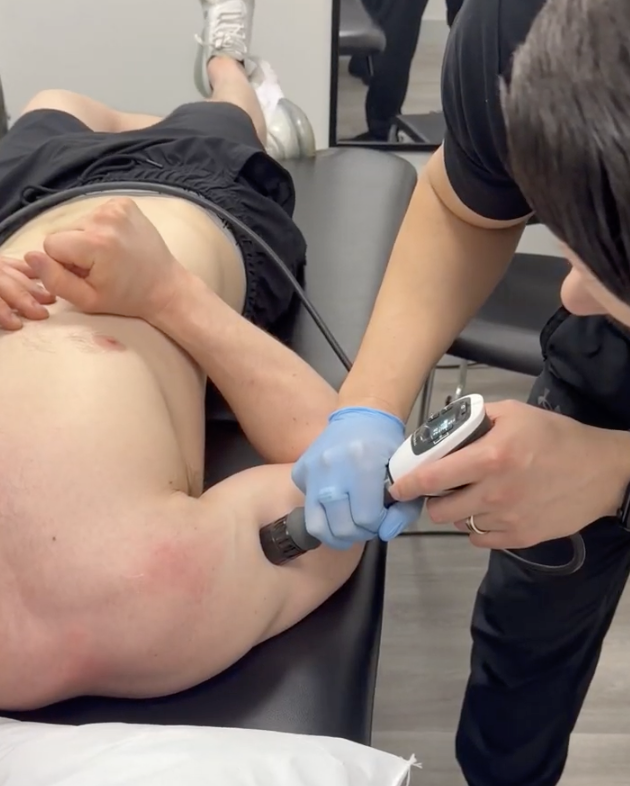
What Is Shockwave Therapy?
Shockwave Therapy is a non-invasive treatment that uses acoustic waves to target injured or irritated soft tissues.
It is commonly used for stubborn tendon and soft tissue conditions that may not be responding well to rest or traditional treatments.
Shockwave Therapy may help:
• support tissue healing
• stimulate recovery processes
• reduce chronic pain
• improve shoulder function
The goal is to help the affected tissues recover and support a return to everyday activities with less discomfort.
What Is IMS?
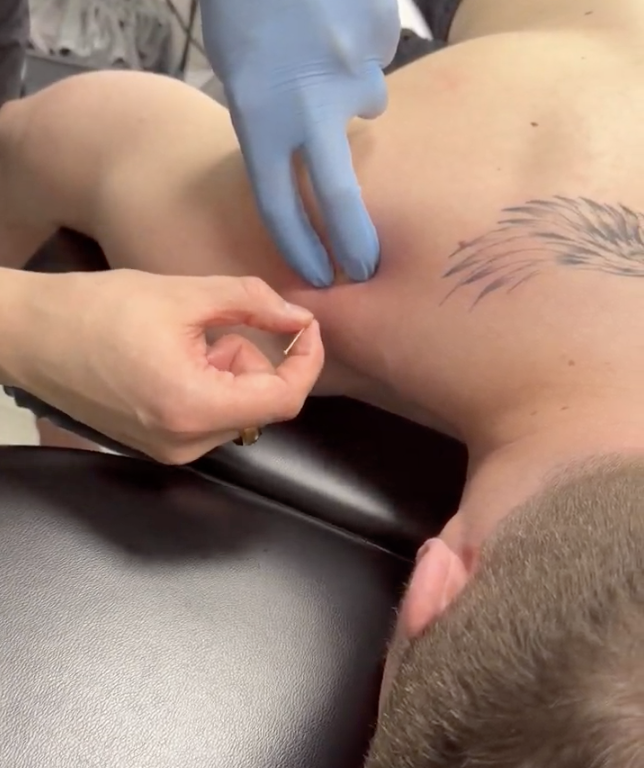
IMS, or Intramuscular Stimulation, is a treatment that focuses on muscles that may be contributing to pain, stiffness, and movement restrictions.
Using fine needles, IMS targets tight muscles and trigger points that can affect how the shoulder moves and functions.
IMS may help:
• release tight muscles
• reduce muscle tension
• improve mobility
• support more comfortable movement
By addressing muscular dysfunction, IMS may help restore more efficient movement patterns throughout the shoulder region.
Why Combine Shockwave Therapy and IMS?
Because shoulder pain can involve both tissue irritation and muscular tension, combining treatments may help address multiple contributors to the problem.
Shockwave Therapy focuses on supporting tissue recovery, while IMS focuses on improving muscle function and mobility.
Together, these treatments may help:
• improve shoulder mobility
• reduce pain and tension
• support tissue healing
• improve overall shoulder function
Treatment recommendations will vary depending on the individual's condition, symptoms, and assessment findings.
Final Thoughts
There is no one-size-fits-all approach to shoulder pain.
When both tissue irritation and muscular tension are contributing to symptoms, multiple treatment approaches may be used to support recovery and movement quality.
A thorough assessment can help determine which treatments may be most appropriate for your specific needs.
Take the Next Step Toward Better Shoulder Function
If shoulder pain, stiffness, or movement limitations are affecting your work, exercise, or daily activities, a professional assessment can help identify what may be contributing to the problem.
Pain Free Health Clinic provides Shockwave Therapy, IMS, physiotherapy, rehabilitation, movement assessment, and recovery-focused care in:
📍 Richmond
📍 Ladner
📍 Surrey
📍 Langley
Watch Shockwave Therapy and IMS in Action
Want to see how Shockwave Therapy and IMS may be used together to help address shoulder pain?
Watch the video above to learn more about these treatment approaches and how they may support recovery and movement.
See More Shoulder Pain & Recovery Tips
Want more educational content about shoulder mobility, injury recovery, rehabilitation, and movement?
Follow Pain Free Health Clinic on YouTube, Instagram, Facebook, and TikTok for more movement, rehabilitation, and wellness content.


