Overhead movement feeling stiff? Learn how thoracic spine mobility works with your shoulders and shoulder blades during reaching, lifting, and other overhead activities.
Overhead Movement Feeling Stiff? Your Upper Back Matters Too
When reaching overhead feels stiff or restricted, it’s easy to focus entirely on the shoulders. But your shoulders don’t work in isolation.
Your thoracic spine, shoulder blades, and shoulders work together when you reach into a high cupboard, place something on a shelf, exercise, or lift your arms overhead.
That’s why upper-back mobility can be an important part of an overall shoulder mobility routine.
What Is the Thoracic Spine?
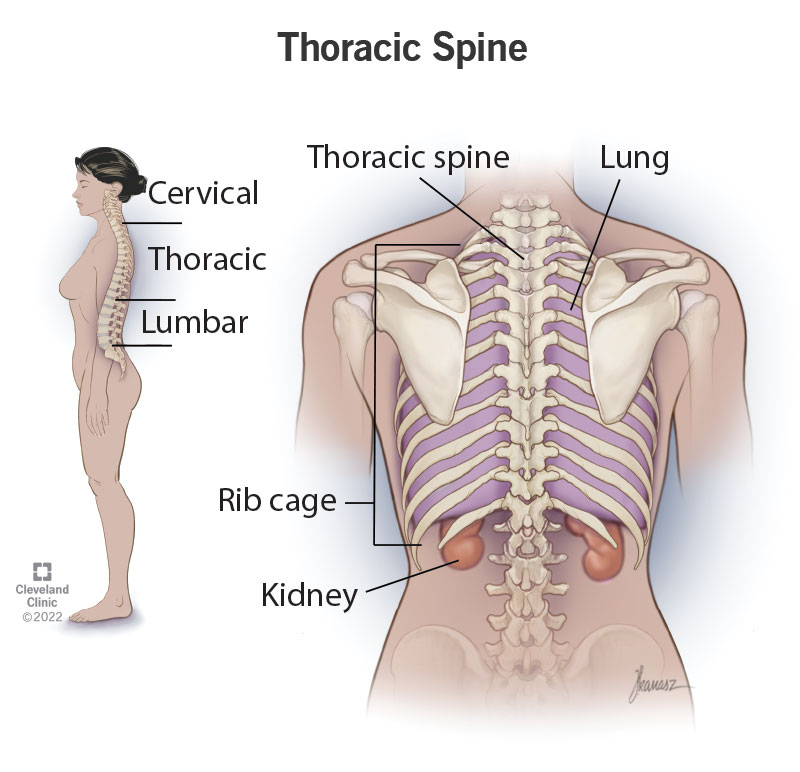
The thoracic spine is the mid-to-upper portion of your back, located between the cervical spine in your neck and the lumbar spine in your lower back.
Movement through this region contributes to many upper-body activities. When you reach overhead, your thoracic spine and shoulder blades work alongside the shoulder joints to help you complete the movement.
This doesn’t mean that every case of limited overhead movement is caused by the thoracic spine. Shoulder mobility, strength, movement control, symptoms, and other individual factors can also play a role.
Why Does Upper-Back Mobility Matter for Overhead Movement?
Overhead movement is a coordinated action involving several areas rather than a movement performed by the shoulder joint alone.
Think about everyday activities such as:
Your upper back needs to move appropriately while your shoulder blades and arms also change position.
If overhead movement feels restricted, assessing how these areas work together can provide more useful information than simply stretching the shoulder.
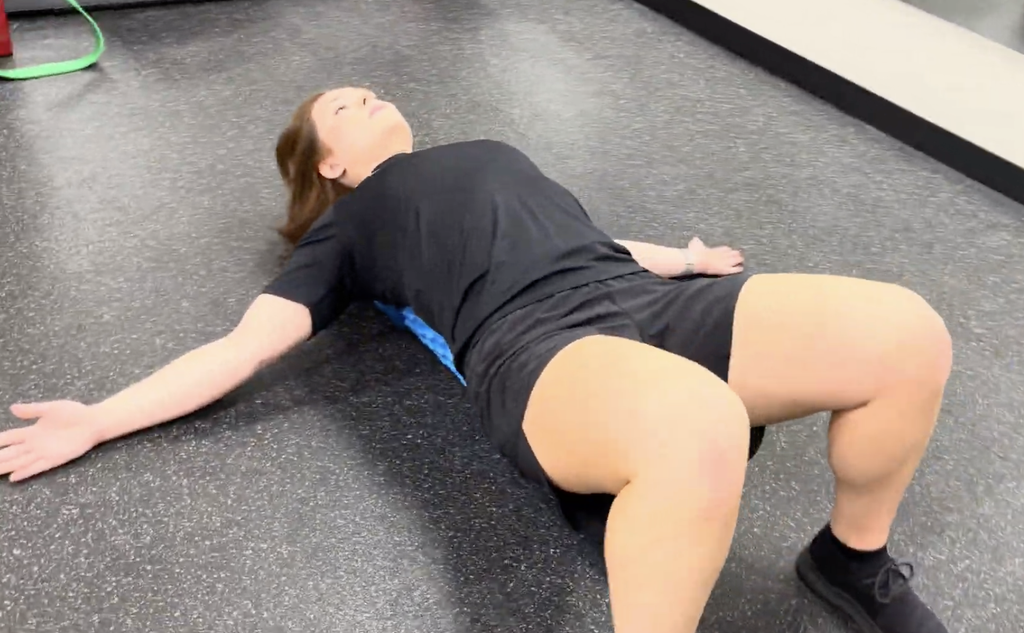
1. Thoracic Foam Rolling
Thoracic foam rolling involves positioning a foam roller along the mid-to-upper back and using it as part of a mobility routine.
It may be incorporated to support:
Foam rolling doesn’t need to be aggressive. The goal is controlled movement through a comfortable range rather than applying as much pressure as possible.
2. Thoracic Mobility With Overhead Movement
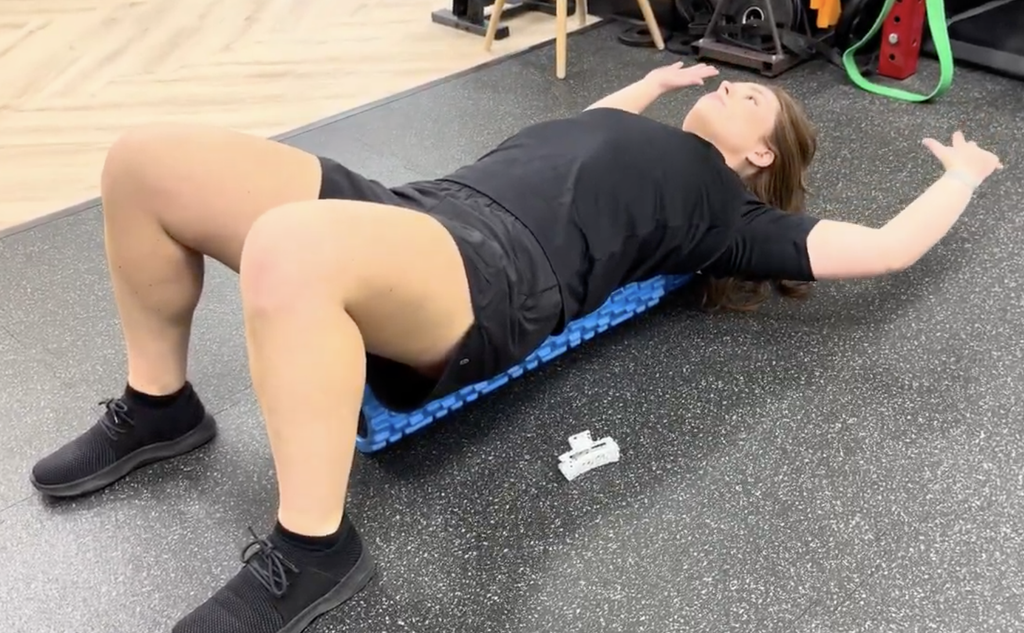
The second exercise combines positioning on the foam roller with overhead shoulder movement.
Instead of working on the upper back alone, the drill incorporates the arm movement used during reaching and lifting overhead.
This can make it a useful mobility exercise when preparing for activities that require coordinated movement between the thoracic spine, shoulder blades, and shoulders.
Why Work on Both?
The first exercise focuses primarily on preparing and moving the thoracic region.
The second adds an overhead movement.
Together, they provide two different ways of incorporating upper-back mobility into a routine while preparing the body for movements that require the arms to travel overhead.
The appropriate exercise will depend on your individual mobility, symptoms, goals, and assessment.
When Should You Have Stiff Overhead Movement Assessed?
Occasional stiffness may respond to appropriate mobility and movement work. However, if reaching overhead consistently causes pain, significant restriction, weakness, or difficulty with everyday activities, an assessment may help determine what is contributing.
A physiotherapist may assess your:
From there, rehabilitation can be individualized rather than assuming the shoulder itself is always the source of the restriction.
Need Help With Upper-Back or Shoulder Mobility?
If stiffness or discomfort is making reaching, lifting, exercising, or overhead activities difficult, our physiotherapy team can assess how your upper back, shoulder blades, and shoulders are working together.
📍 Richmond
📍 Ladner
📍 Surrey
📍 Langley
Watch the Video
Overhead movement feeling stiff? Give your upper back some attention.
Watch our team demonstrate Thoracic Foam Rolling and Thoracic Mobility + Overhead Reach, two movements that can be incorporated into a mobility routine for the upper back and shoulders.
Learn More About Thoracic & Shoulder Mobility
Follow Pain Free Health Clinic on YouTube, Instagram, Facebook, and TikTok for more educational content on thoracic mobility, shoulder mobility, upper-back mobility, foam rolling, shoulder exercises, physiotherapy, mobility exercises, and active rehabilitation to help you move with confidence.


