When you visit a physiotherapist for hip, knee, back, or lower-limb pain, the assessment should involve more than examining the area where you feel discomfort. Pain may be influenced by how different parts of the body move and work together.
At Pain Free Health Clinic, our physiotherapists take a detailed, individualized approach. We assess the person—not just the painful body part—so that treatment can address the factors that may be contributing to the problem.
What Is Hip Biomechanics?
Hip biomechanics refers to how the hip joint and surrounding muscles function during movement. It also includes the relationship between the pelvis, lower back, knees, ankles, and feet.
For example, reduced hip strength or control may affect the position of the pelvis and knee during walking, running, climbing stairs, or balancing on one leg. These patterns may contribute to discomfort, reduced confidence, or difficulty performing everyday and recreational activities.
No single posture or movement pattern automatically means that something is wrong. The findings must be considered alongside the patient’s symptoms, history, strength, mobility, goals, and daily demands.
What May Be Included in a Hip Biomechanical Assessment?
Depending on the patient’s condition and clinical needs, a physiotherapy assessment may examine:
The physiotherapist may also assess the lower back, knees, ankles, and feet when these areas could be influencing the patient’s movement or symptoms.
Using Visual Feedback to Help Patients Understand
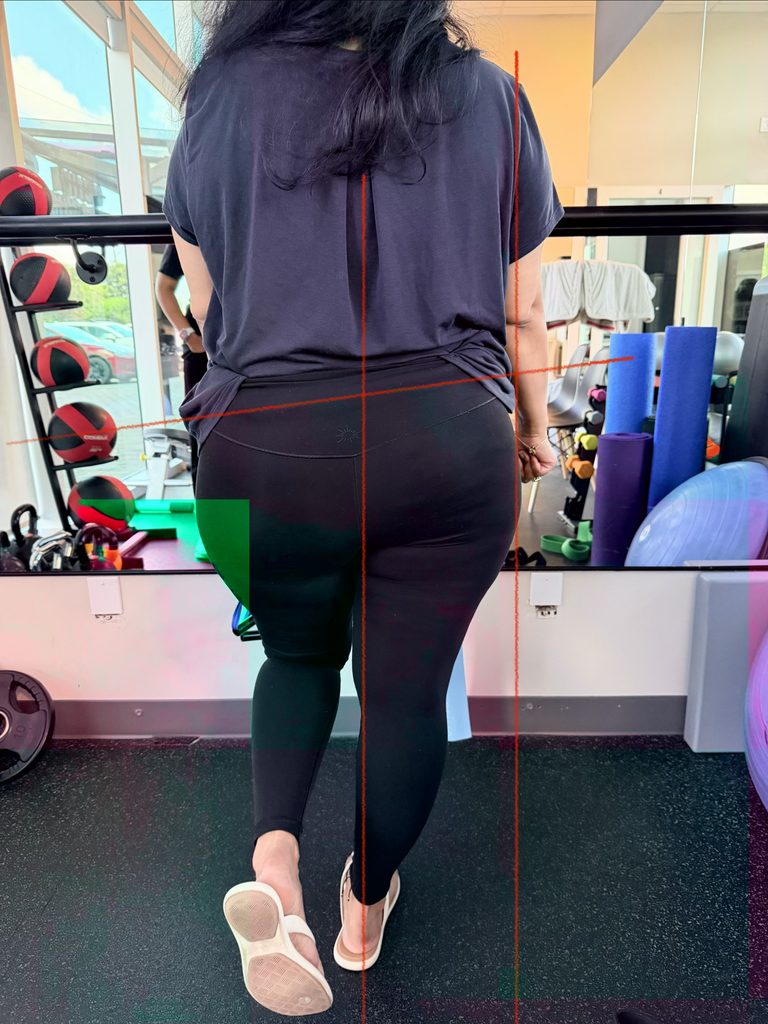
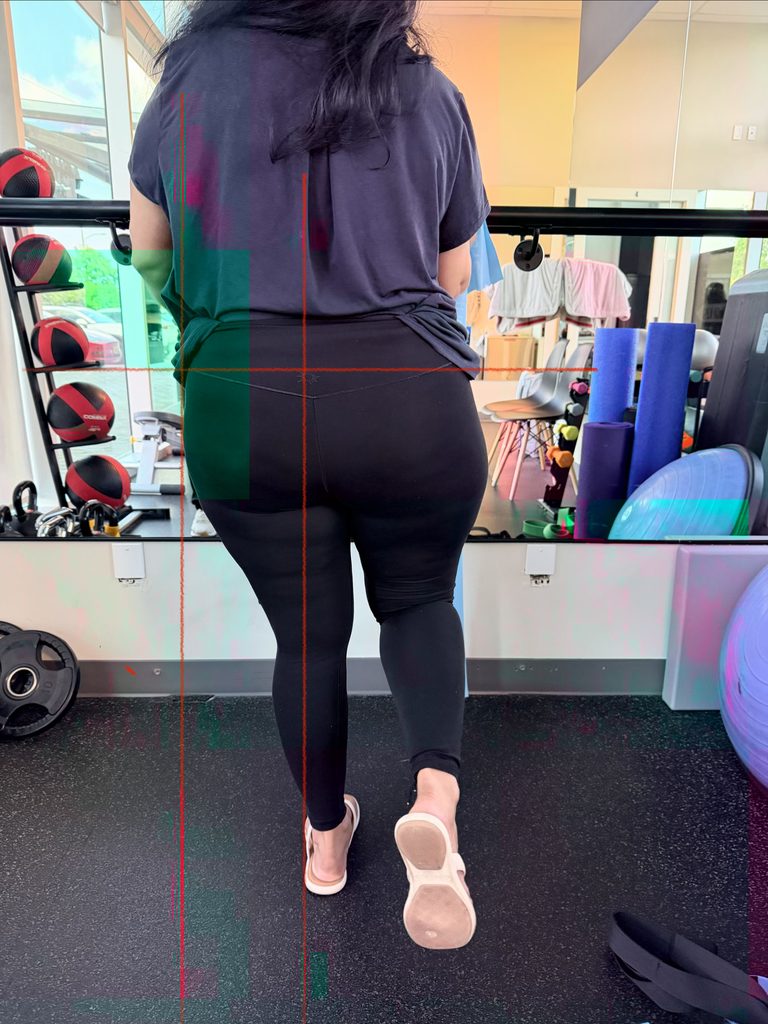
When clinically appropriate and with the patient’s consent, our physiotherapists may use photographs, videos, and visual reference lines as part of the assessment.
These tools can help illustrate changes in pelvic position, balance, alignment, or movement between different tasks. Visual feedback may also make it easier for patients to understand what their physiotherapist is assessing and why particular exercises have been recommended.
A visual assessment is only one part of the clinical picture. It does not provide a diagnosis by itself and must be interpreted together with the patient’s history and physical examination.
Why a Detailed Assessment Matters
Two people with pain in the same area may have very different contributing factors. One person may need to improve hip mobility, while another may benefit from greater strength, balance, movement control, activity modification, or a gradual return to exercise.
A detailed assessment helps the physiotherapist:
What Makes Physiotherapy at Pain Free Health Clinic Different?
Our physiotherapists aim to provide care that is thorough, collaborative, and focused on each patient’s goals.
We look beyond the site of pain
The painful area is important, but it may not tell the entire story. We consider how nearby joints, muscles, and movement patterns may be affecting the patient’s function.
We make the assessment understandable
Patients deserve to know what is being assessed and how it relates to their treatment. Visual feedback and clear explanations can help patients participate more actively in their rehabilitation.
We individualize treatment
There is no universal exercise program for hip pain. Treatment is selected according to the patient’s assessment findings, symptoms, abilities, lifestyle, and goals.
We focus on meaningful progress
The objective is not simply to complete exercises in the clinic. It is to help each patient move more comfortably and return to the activities that matter to them.
A Better Assessment Leads to a More Purposeful Plan
If hip, knee, lower-back, or lower-limb symptoms are interfering with your daily life, a comprehensive assessment can help clarify what may be contributing to them.
At Pain Free Health Clinic, our physiotherapists combine clinical assessment, movement analysis, patient education, and individualized rehabilitation to create a plan that makes sense for you.
Does your physiotherapist assess your hip biomechanics?
Book a physiotherapy assessment with Pain Free Health Clinic and let us take a closer look at how you move.
This article provides general information and is not a substitute for an individualized medical or physiotherapy assessment. Assessment and treatment methods vary according to each patient’s condition and clinical needs.


