Tight neck and shoulder muscles with recurring symptoms? Learn how thoracic outlet syndrome may involve the neck, shoulder and chest, and how physiotherapy assessment can guide individualized treatment.
Tight Neck and Shoulder Muscles With Recurring Symptoms? Here’s Why We May Look Beyond Where It Hurts
Tightness or discomfort around your neck and shoulders can make it tempting to focus treatment only on the area that feels sore.
However, with concerns such as thoracic outlet syndrome (TOS), assessment may look beyond the painful or tight area. The muscles and structures around the neck, shoulder, and chest can all be relevant when trying to understand a patient's symptoms.
Treatment may include trigger point techniques and manual therapy, but these are only part of the bigger picture. Mobility, movement, strength, symptoms, and how you respond to treatment can also help guide an individualized rehabilitation plan.
What Is Thoracic Outlet Syndrome?
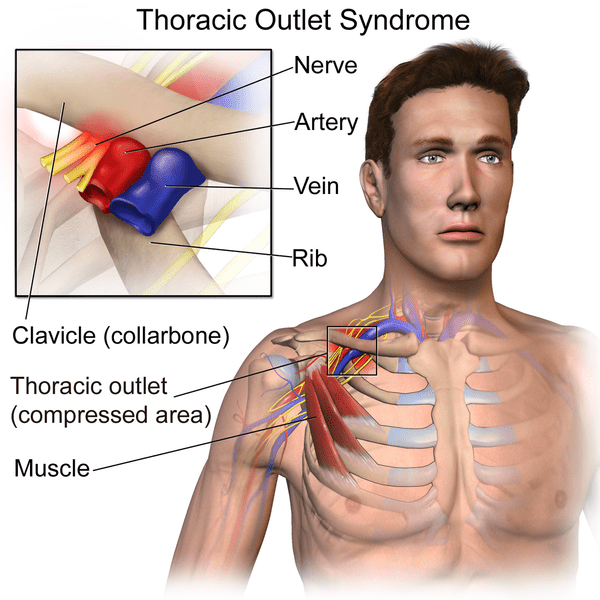
Thoracic outlet syndrome refers to symptoms associated with compression or irritation of structures passing through the thoracic outlet—the region between the neck and upper chest toward the arm.
With TOS and other neck or shoulder concerns, surrounding muscles may become tight or sensitive and may contribute to symptoms affecting the neck, shoulder, or arm.
Because symptoms can have different causes, a proper assessment is important rather than assuming that muscle tightness alone explains what you're experiencing.
Thoracic Outlet Syndrome, Image Credit: https://www.physiotutors.com/conditions/thoracic-outlet-syndrome/
Why Assess the Neck, Shoulder and Chest?
The neck, shoulder, chest, and arm don't function independently of one another.
When someone presents with recurring symptoms, an assessment may consider areas such as:
The goal is to understand the individual presentation and determine which factors may be relevant to treatment.
Where Does Trigger Point Therapy Fit In?
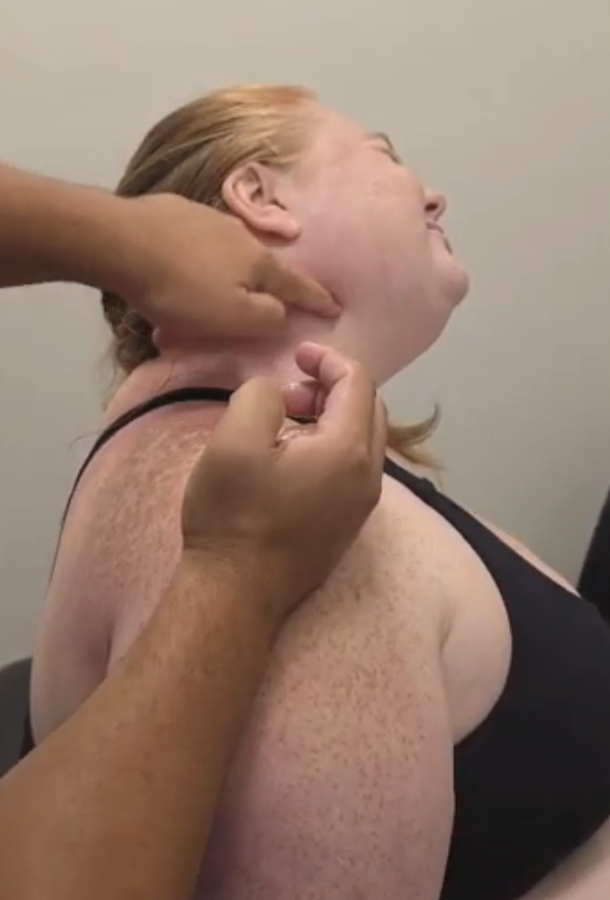
Sensitive areas within the muscles may sometimes be addressed using trigger point techniques or other forms of manual therapy.
Trigger point work may help address muscle-related discomfort and sensitive areas as one part of a broader treatment plan.
However, treatment shouldn't necessarily stop at pressing on the area that feels tight.
A broader rehabilitation approach may also include mobility work, movement retraining, strengthening, and reassessment based on the patient's needs and response.
Treat, Move and Reassess
A useful rehabilitation approach is not simply:
Find a tight muscle → treat it → finish.
Instead, treatment can involve addressing relevant findings and then looking at how the patient moves and responds.
Depending on the assessment, treatment may include:
This allows treatment to be adjusted according to the individual's symptoms, abilities, and response rather than using the same approach for everyone.
Headache and Blurry Vision Should Not Automatically Be Attributed to TOS
In the patient example shown in our video, the patient also reported a headache with blurry vision in the right eye.
This is an important distinction: visual changes shouldn't automatically be assumed to come from thoracic outlet syndrome, muscle tightness, or trigger points.
Blurry vision and other visual changes should receive appropriate medical assessment rather than simply being treated as a muscle-related symptom.
Why Individualized Assessment Matters
Two people with neck, shoulder, or arm symptoms may not have the same contributing factors—or require the same treatment.
An individualized assessment can help determine which findings are relevant and whether treatment should focus on mobility, strength, muscle-related discomfort, movement patterns, or other factors.
Trigger point work can be useful as one component of care, but the broader goal is to understand the patient's symptoms and create a rehabilitation plan based on their individual presentation.
Need Help With Persistent Neck, Shoulder or Arm Symptoms?
If neck, shoulder, or arm symptoms keep returning, our team can assess your movement, symptoms, and individual needs to help determine an appropriate next step.
📍 Richmond
📍 Ladner
📍 Surrey
📍 Langley
Watch the Video
Watch our video to see how assessment and treatment may look beyond the area that feels tight when addressing neck, shoulder, and arm symptoms.
Learn More About Thoracic Outlet Syndrome
Follow Pain Free Health Clinic on YouTube, Instagram, Facebook, and TikTok for more educational content on thoracic outlet syndrome, neck pain, shoulder pain, trigger point therapy, physiotherapy, mobility, and movement health.


